
Relapse Prevention After Addiction Treatment in Turkey: A Follow-Up Guide for International Patients
Finishing addiction treatment is an important achievement, but it is not the end of recovery. For many patients and families, the most sensitive stage begins after detox, inpatient rehab, outpatient care, or dual diagnosis treatment. The patient may return home, face old pressures, meet the same social environment, experience emotional stress, or struggle with cravings and daily routines again.
This is why relapse prevention after addiction treatment in Turkey should be planned before the patient leaves treatment, not after problems appear. Recovery is not only about stopping substance use for a short period. It is about building a practical system that helps the patient stay stable, avoid high-risk situations, manage emotional triggers, and continue medical or psychological follow-up when needed.
SAMHSA defines recovery as a process of change through which people improve their health and wellness, live self-directed lives, and work toward their full potential. This shows that recovery is not a single event, but a continuing journey that needs structure and support.
Why Relapse Prevention Matters After Treatment
Many families believe that if the patient completes detox or a rehabilitation program, the addiction problem is finished. This is one of the most common misunderstandings.
Detox may help the body pass through withdrawal. Residential treatment may provide structure and distance from triggers. Outpatient treatment may offer flexibility. Dual diagnosis treatment may address addiction together with mental health symptoms. But after all of these steps, the patient still needs a realistic plan for life after treatment.
NIDA explains that effective addiction treatment should address more than substance use alone, including the medical, psychological, social, and other needs of the patient. It also emphasizes that recovery often requires continuing care and treatment adjustment according to the patient’s changing needs.
Relapse prevention is important because it helps the patient answer practical questions:
How will I manage stress after returning home?
What should I do if cravings appear?
How can my family support me without pressure?
Do I need therapy after treatment?
Should I continue psychiatric follow-up?
How do I avoid the people or places linked to addiction?
What happens if I feel emotionally weak again?
Without clear answers, the patient may feel alone after treatment, and the family may not know how to respond.
For consultation and treatment coordination with Dr. Al-Akkad:
WhatsApp: +905379336844
Website: https://www.dr-alakkad.com/en
What Is Relapse Prevention?
Relapse prevention is a structured plan designed to reduce the risk of returning to substance use after treatment. It does not mean that the patient is weak or expected to fail. It means that addiction recovery needs preparation, follow-up, and support.
A good relapse prevention plan may include:
Regular follow-up appointments
Psychological therapy
Psychiatric evaluation when needed
Family education
Lifestyle planning
Avoiding high-risk environments
Managing stress and emotional triggers
Healthy sleep and daily routines
Support groups or recovery communities
Emergency contact planning
Work, study, or social reintegration
Monitoring mental health symptoms
Relapse prevention is especially important for international patients because they may receive treatment in Turkey, then return to a completely different environment in their home country. The transition must be planned carefully.
Detox Is Not Enough Without Aftercare
Medical detox is often the first step in addiction treatment, but it is not a complete recovery plan. Detox may help with physical stabilization, but it does not automatically change habits, emotional triggers, family conflict, or mental health symptoms.
NIDA notes that medically assisted detoxification is only the first stage of treatment and by itself does little to change long-term substance use. This is why detox should be connected to rehabilitation, therapy, psychiatric support, and aftercare planning.
For example, a patient may complete detox successfully, feel physically better, and then return home. But if the patient returns to stress, isolation, untreated depression, or the same social circle linked to substance use, the risk of relapse may increase.
This is why the question should not be:
“Did the patient finish detox?”
The better question is:
“What is the patient’s recovery plan after detox?”
For consultation and treatment coordination with Dr. Al-Akkad:
WhatsApp: +905379336844
Website: https://www.dr-alakkad.com/en
Common Relapse Triggers After Addiction Treatment
A relapse trigger is anything that increases the patient’s risk of returning to substance use. Triggers can be emotional, social, environmental, or psychological.
Common relapse triggers may include:
Stress at home or work
Family conflict
Loneliness or isolation
Anxiety or depression
Sleep problems
Financial pressure
Old friends linked to substance use
Returning to places associated with addiction
Lack of daily routine
Overconfidence after treatment
Untreated trauma
Boredom
Shame or guilt
Stopping therapy too early
Triggers do not always appear suddenly. Sometimes relapse risk builds slowly when the patient becomes disconnected from support, stops follow-up, hides emotional struggles, or returns to old habits.
The Role of Mental Health in Relapse Prevention
Mental health is one of the most important parts of relapse prevention. Many patients do not use substances only for pleasure. Some use them to escape anxiety, sadness, trauma, sleep problems, or emotional pain.
If these issues remain untreated, relapse prevention becomes much harder.
NIMH explains that substance use disorders and mental disorders are often interconnected, and diagnosis can be complex because symptoms may overlap. This supports the need for careful mental health assessment in addiction recovery.
Patients may need follow-up for:
Depression
Anxiety
Panic symptoms
Trauma-related symptoms
Sleep disturbance
Mood instability
Emotional exhaustion
Low motivation
Family stress
This is especially important for patients who received dual diagnosis treatment in Turkey, because the recovery plan should continue addressing both addiction and mental health after returning home.
Family Support After Addiction Treatment
Family support can be a major factor in recovery, but it must be handled carefully. Families often want to help, but fear and frustration may lead to pressure, blame, or constant monitoring. This can create tension and may push the patient away from support.
A healthier family approach includes:
Encouraging follow-up care
Avoiding shame-based language
Setting clear boundaries
Supporting healthy routines
Learning about addiction recovery
Helping the patient avoid triggers
Communicating calmly
Encouraging professional help when symptoms return
Understanding that recovery takes time
Family education is not only for the patient’s benefit. It also helps relatives protect themselves emotionally and understand how to support recovery without enabling harmful behavior.
Aftercare Options After Addiction Treatment in Turkey
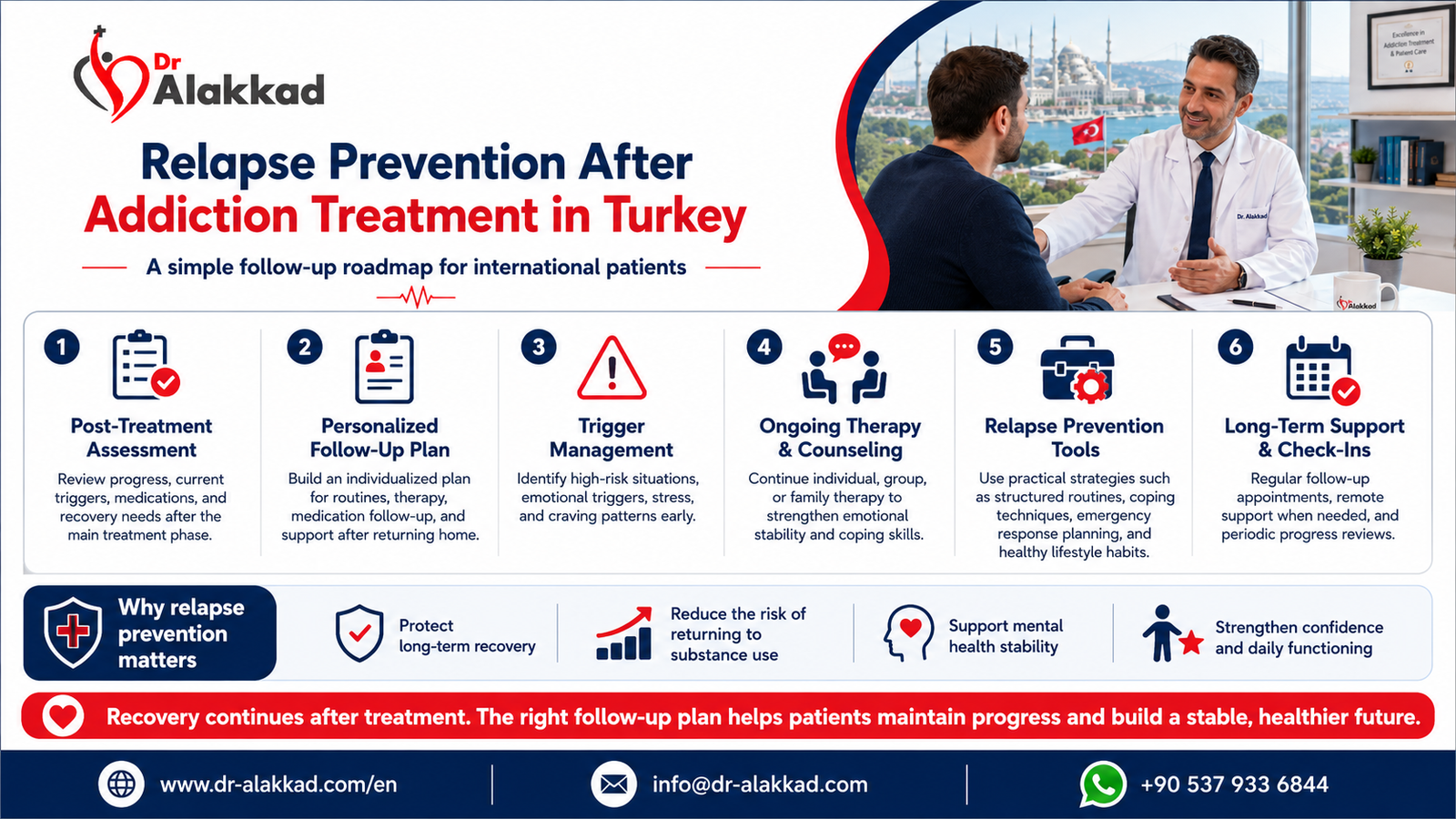
Aftercare means the support that continues after the main treatment program ends. The right aftercare plan depends on the patient’s condition, addiction history, mental health needs, and home environment.
Possible aftercare options include:
1. Regular Medical Follow-Up
Some patients may need periodic medical review, especially if they received detox, psychiatric medication, or treatment for physical complications.
2. Psychological Therapy
Therapy can help the patient manage cravings, stress, emotional pain, trauma, and relapse triggers. It can also help rebuild confidence and healthier coping skills.
3. Psychiatric Follow-Up
If the patient has depression, anxiety, bipolar symptoms, trauma-related symptoms, or sleep problems, psychiatric follow-up may be needed.
4. Family Counseling
Family counseling may help reduce conflict, improve communication, and create a safer recovery environment.
5. Support Groups
Some patients benefit from structured recovery communities or support groups. These can reduce isolation and help the patient feel understood.
6. Lifestyle Planning
Recovery becomes stronger when the patient has a daily routine that includes sleep, nutrition, movement, work, study, family time, and meaningful goals.
7. Emergency Relapse Response Plan
The patient and family should know what to do if warning signs appear. This may include contacting a doctor, therapist, treatment coordinator, or trusted family member.
For consultation and treatment coordination with Dr. Al-Akkad:
WhatsApp: +905379336844
Website: https://www.dr-alakkad.com/en
Warning Signs That Relapse Risk May Be Increasing
Families should watch for early warning signs, but without turning the home into a place of fear or suspicion.
Possible warning signs include:
The patient stops attending follow-up appointments
The patient becomes isolated
Sleep becomes unstable
Old social contacts return
The patient becomes defensive about recovery
Mood changes become stronger
The patient avoids family discussions
Daily routine disappears
The patient shows signs of depression or anxiety
The patient starts minimizing the risk of addiction
The patient refuses therapy or support
These signs do not always mean relapse has happened. They may mean the recovery plan needs adjustment.
How International Patients Can Prepare Before Leaving Turkey
For international patients, discharge planning is very important. The patient should not leave Turkey without a clear understanding of the next stage.
Before returning home, the patient and family should clarify:
What follow-up is needed?
Are there medications that need review?
Does the patient need therapy after returning home?
What are the main relapse triggers?
What should the family do if symptoms return?
Who should be contacted in an urgent situation?
Is the patient ready for work, study, or travel?
Should the patient avoid certain people or environments?
Is there a written recovery plan?
A written follow-up plan can make the transition safer and more organized.
How Much Does Relapse Prevention and Aftercare Cost?
The cost of relapse prevention after addiction treatment in Turkey depends on the patient’s aftercare needs.
Costs may vary according to:
Number of follow-up consultations
Need for psychiatric review
Therapy sessions
Family counseling
Medication review
Online or in-person follow-up
Translation or coordination support
Duration of aftercare
Need for additional rehabilitation services
Families should not look at aftercare as an optional extra. In many cases, aftercare is the part that protects the investment already made in treatment.
The Role of Dr. Al-Akkad in Relapse Prevention Support
For international patients, relapse prevention requires organization before and after treatment. Dr. Al-Akkad can support patients and families by helping them understand the treatment pathway and prepare for the next stage after care in Turkey.
This support may include:
Reviewing the patient’s case before treatment
Helping families understand the difference between detox, residential care, outpatient care, and aftercare
Coordinating with suitable medical providers in Turkey
Helping the family prepare questions before discharge
Clarifying follow-up needs
Supporting communication with medical teams
Helping families understand warning signs
Encouraging a realistic recovery plan after returning home
The goal is not to promise that relapse can never happen. The goal is to reduce risk, improve preparedness, and help the patient and family move forward with a clearer plan.
Common Mistakes Families Should Avoid After Treatment
Families should avoid these mistakes after the patient returns home:
Assuming treatment is finished completely
Stopping follow-up too early
Ignoring depression or anxiety
Returning the patient to the same high-risk environment
Using blame or shame
Giving the patient no structure
Expecting instant personality change
Not discussing relapse warning signs
Choosing no aftercare to reduce cost
Believing that willpower alone is enough
Recovery needs patience, structure, and continued care.
For consultation and treatment coordination with Dr. Al-Akkad:
WhatsApp: +905379336844
Website: https://www.dr-alakkad.com/en
FAQ: Relapse Prevention After Addiction Treatment in Turkey
What is relapse prevention after addiction treatment?
Relapse prevention is a structured plan that helps patients reduce the risk of returning to substance use after detox, rehabilitation, outpatient treatment, or dual diagnosis care.
Is relapse prevention necessary after detox?
Yes. Detox alone is usually not enough for long-term recovery. Patients often need therapy, follow-up, family support, and relapse prevention planning after detox.
Can relapse happen after rehab?
Yes, relapse can happen after treatment, especially if the patient returns to old triggers without support. This does not mean treatment failed, but it means the recovery plan may need adjustment.
How can families help prevent relapse?
Families can help by encouraging follow-up, reducing conflict, avoiding blame, supporting healthy routines, and learning about addiction recovery.
Does mental health affect relapse risk?
Yes. Depression, anxiety, trauma, sleep problems, and emotional stress can increase relapse risk if they are not addressed properly.
Can international patients continue follow-up after returning home?
Yes. Follow-up may continue through local doctors, therapists, online consultations, or coordinated communication with healthcare providers, depending on the patient’s case.
How can Dr. Al-Akkad help?
Dr. Al-Akkad can help international patients and families understand the treatment journey, coordinate with suitable medical providers in Turkey, prepare for discharge, and organize a clearer relapse prevention plan.
Medical Disclaimer
This article is for educational purposes only. It does not replace medical evaluation, diagnosis, or treatment by a qualified doctor, psychiatrist, addiction specialist, or healthcare provider. Addiction recovery and relapse prevention should be planned with licensed professionals, especially when there are mental health symptoms, withdrawal concerns, or safety risks.
Final Thoughts
Relapse prevention after addiction treatment in Turkey is one of the most important parts of the recovery journey. Detox, residential treatment, outpatient care, and dual diagnosis treatment can all be valuable, but their impact becomes stronger when they are connected to a realistic aftercare plan.
For international patients, the return home should not be treated as the end of treatment. It should be treated as the beginning of a new stage: follow-up, emotional stability, family support, healthy routines, and long-term recovery planning.
For consultation and treatment coordination with Dr. Al-Akkad:
WhatsApp: +905379336844
Website: https://www.dr-alakkad.com/en
Suggested Internal Links
Medical Detox Treatment in Turkey
Residential Addiction Treatment in Turkey
Outpatient Addiction Treatment in Turkey
Dual Diagnosis Treatment in Turkey
Drug Addiction Treatment in Turkey
Alcohol Addiction Treatment in Turkey
Addiction Treatment in Turkey
Mental Health Treatment in Turkey