
Alcohol Addiction Treatment in Turkey: Medical Care, Detox, and Recovery Support
Alcohol Addiction Treatment in Turkey: Medical Care, Detox, and Recovery Support
Alcohol addiction is one of the most misunderstood health conditions in the world. Many families see it only as a behavioral problem, while many patients feel shame, fear, or denial before asking for help. In reality, alcohol use disorder is a medical condition that can affect the brain, body, emotions, relationships, work, and long-term health.
For international patients, alcohol addiction treatment in Turkey may be an option when the patient needs privacy, medical supervision, psychological support, and a structured recovery plan away from daily triggers. But treatment should never be chosen randomly. Alcohol addiction requires careful assessment, safe planning, and professional follow-up.
The National Institute on Alcohol Abuse and Alcoholism describes alcohol use disorder as a medical condition involving difficulty stopping or controlling alcohol use despite harmful consequences, and it may range from mild to severe.
For private case review and treatment coordination in Turkey, contact Dr. Al-Akkad through WhatsApp:
Contact Dr. Al-Akkad on WhatsApp
What Is Alcohol Addiction?
Alcohol addiction, medically known as alcohol use disorder, happens when a person loses control over drinking, continues drinking despite harm, or feels unable to stop even when alcohol is damaging their life.
Alcohol addiction may affect:
Personal relationships
Work or education
Sleep and mood
Liver and heart health
Memory and concentration
Family stability
Financial decisions
Mental health
Unhealthy alcohol use can range from risky drinking patterns to severe alcohol dependence, and it may create serious health and safety risks.
This is why alcohol addiction should not be treated as a simple habit. It needs a medical and psychological approach.
Why Alcohol Addiction Treatment Needs Medical Supervision
One of the biggest mistakes families make is thinking that the patient only needs to “stop drinking.” In some cases, stopping suddenly without medical supervision may be risky, especially when the body has become dependent on alcohol.
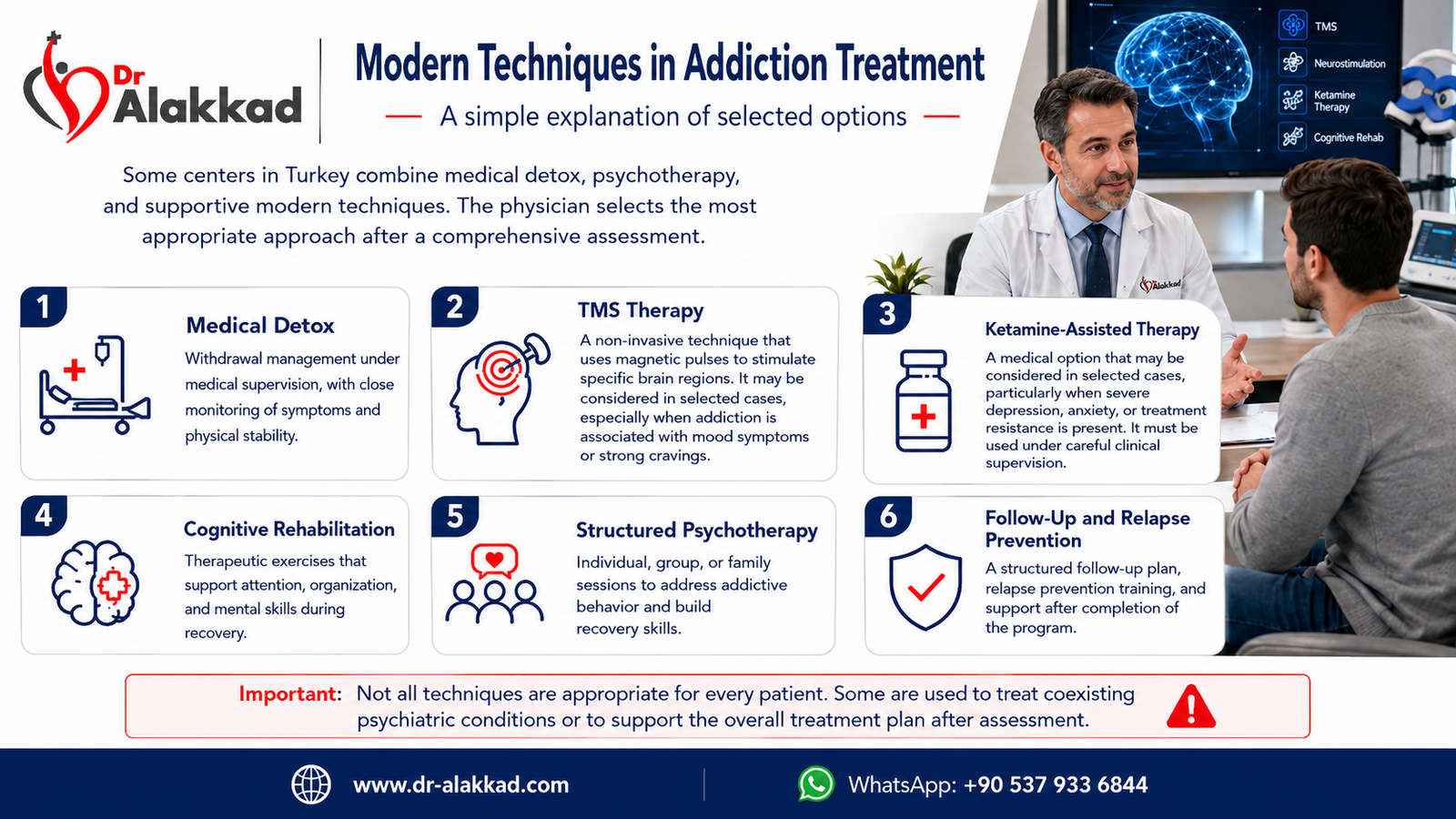
Alcohol addiction treatment may involve medical evaluation, detox planning, psychiatric care, therapy, medication when appropriate, family support, and long-term relapse prevention.
Mayo Clinic explains that treatment may include detox, psychological counseling, medications, treatment for mental health conditions, treatment for alcohol-related health problems, and residential programs in more serious cases.
This means treatment should be designed around the patient’s real condition, not around a fixed package.
Why Some Patients Consider Turkey for Alcohol Addiction Treatment
Turkey may be considered by international patients because it offers access to private medical services, psychiatric evaluation, therapy support, rehabilitation coordination, and discreet healthcare planning.
For some patients, traveling abroad can provide:
Distance from drinking triggers
More privacy
A structured treatment environment
Access to medical coordination
Time away from social pressure
A chance to focus on recovery
Support for international patients and families
However, treatment abroad is not suitable for every case. Some patients may need urgent local care before travel, especially if they are medically unstable, severely intoxicated, at risk of complicated withdrawal, or experiencing serious psychiatric symptoms.
This is why Dr. Al-Akkad’s role begins with understanding the case before recommending any treatment direction.
The First Step: Medical Assessment
Before choosing alcohol detox, residential rehab, outpatient treatment, or online follow-up, the patient should be assessed carefully.
A proper assessment may include:
Drinking history
Duration and quantity of alcohol use
Previous attempts to stop
Withdrawal symptoms
Physical health condition
Liver and heart health concerns
Mental health symptoms
Family and social support
Risk of relapse
Current medications
Travel suitability
NIAAA explains that evidence-based treatment for alcohol use disorder may include behavioral treatments, FDA-approved medications, mutual support groups, or a combination of these options.
This makes assessment essential, because each patient may need a different combination of care.
Alcohol Detox in Turkey
Alcohol detox is the process of helping the body safely adjust after stopping or reducing alcohol use. Detox may be needed when the patient has physical dependence or withdrawal symptoms.
The goal of detox is medical safety. It is not the complete treatment.
After detox, the patient usually still needs psychological therapy, relapse prevention, family education, and follow-up. Without these stages, the risk of returning to drinking may remain high.
This is why families should avoid thinking of detox as a “quick cure.” Detox can be an important first step, but recovery needs a complete plan.
Residential Alcohol Treatment in Turkey
Residential treatment may be suitable for patients who need a structured environment and close support. In residential care, the patient stays in a treatment setting and follows a supervised program.
This may be appropriate when:
The addiction is severe
The patient has relapsed many times
The home environment is not supportive
There are strong cravings
The patient drinks despite serious consequences
There are mental health concerns
The patient needs daily structure
Mayo Clinic notes that serious alcohol use disorder may require residential treatment, which often includes individual and group therapy, educational sessions, family involvement, and care from professionals experienced in addiction treatment.
Residential care can help the patient step away from triggers and focus fully on recovery.
Outpatient Alcohol Treatment
Outpatient treatment may be suitable for patients who are medically stable and have strong support at home. It allows the patient to receive care without staying inside a treatment facility.
Outpatient treatment may include:
Psychiatric consultation
Therapy sessions
Medication monitoring when appropriate
Family counseling
Relapse prevention planning
Regular follow-up
Outpatient care can be effective for selected patients, but it is not always enough for severe cases. The decision should be based on medical assessment.
Medication for Alcohol Addiction
Some patients may benefit from medication as part of treatment. Medication is not a replacement for therapy, but it may help reduce cravings, support abstinence, or reduce the risk of relapse when used correctly by qualified professionals.
NIAAA explains that approved medications are available for alcohol use disorder and may be used alone or together with other forms of treatment.
SAMHSA also states that medications can be part of evidence-based treatment for alcohol use disorder and other substance use disorders.
This decision must always be made by a qualified doctor after assessing the patient’s condition. Patients should not take or stop medications without medical supervision.
Therapy and Psychological Treatment
Alcohol addiction is often connected to emotional pain, stress, anxiety, depression, trauma, loneliness, or family conflict. For many patients, alcohol becomes a way to escape feelings they cannot manage.
Therapy helps the patient understand:
Why drinking became difficult to control
What triggers the desire to drink
How stress affects behavior
How to manage cravings
How to rebuild healthy routines
How to repair family relationships
How to prevent relapse
Behavioral health treatments are part of evidence-based care for alcohol use disorder, and NIAAA emphasizes the importance of offering appropriate treatment options based on patient needs.
A serious alcohol treatment plan should therefore include psychological support, not only detox.
Family Support in Alcohol Addiction Treatment
Families often suffer silently. They may feel angry, tired, afraid, or ashamed. Some families try to force the patient to stop, while others hide the problem for years.
But addiction treatment works better when families understand the condition and learn how to support recovery without blame or chaos.
Family support may include:
Encouraging treatment
Avoiding humiliation
Setting healthy boundaries
Learning about relapse signs
Supporting follow-up care
Reducing conflict at home
Participating in family counseling when needed
The goal is not to protect the addiction. The goal is to support the patient while also protecting the family’s emotional health.
Alcohol Addiction and Mental Health
Alcohol addiction often appears together with mental health conditions such as anxiety, depression, sleep disorders, trauma-related symptoms, or emotional instability.
Mayo Clinic notes that alcohol use disorder commonly occurs along with other mental health disorders, and patients may need psychotherapy, medication, or other treatment for these conditions.
This is why treating alcohol addiction without looking at mental health may be incomplete. A patient may stop drinking for a period, but if anxiety, depression, or trauma remain untreated, relapse risk may increase.
Long-Term Recovery and Relapse Prevention
Recovery from alcohol addiction does not end after detox or discharge from a treatment center. Long-term recovery requires planning.
A relapse prevention plan may include:
Follow-up appointments
Therapy continuity
Avoiding high-risk situations
Managing stress
Family support
Medication monitoring when appropriate
Building a daily routine
Sleep and nutrition improvement
Emergency plan if cravings return
The World Health Organization’s 2024 global report highlights the public health burden of alcohol-related harm and the importance of treatment capacity for alcohol and substance use disorders.
This shows why addiction treatment should be treated seriously as part of healthcare, not as a private weakness.
The Role of Dr. Al-Akkad
Dr. Al-Akkad helps international patients and families approach alcohol addiction treatment in Turkey with clarity and medical responsibility.
This support may include:
Reviewing the patient’s situation
Understanding the severity of alcohol use
Identifying whether detox may be needed
Helping select a suitable treatment pathway
Coordinating with medical providers in Turkey
Explaining expected stages and possible duration
Supporting communication before and during treatment
Helping plan follow-up after treatment
The goal is not to promise instant recovery. The goal is to help the patient and family make a safe, realistic, and informed decision.
For confidential consultation:
Contact Dr. Al-Akkad on WhatsApp
When Should a Patient Seek Help?
A patient should consider professional help when alcohol begins to affect health, behavior, relationships, work, studies, finances, or emotional stability.
Warning signs may include:
Inability to control drinking
Drinking despite harm
Failed attempts to stop
Hiding alcohol use
Family conflict
Work or study problems
Mood changes
Sleep problems
Physical symptoms after stopping
Returning to drinking after treatment
In urgent or dangerous situations, the patient should seek local emergency medical care. For non-emergency treatment planning in Turkey, Dr. Al-Akkad can help review the case and guide the family.
Alcohol Addiction Treatment in Turkey: Step-by-Step
Step 1: Private Contact
The patient or family contacts Dr. Al-Akkad through WhatsApp and explains the situation confidentially.
Start a Private WhatsApp Consultation
Step 2: Case Review
The case is reviewed, including alcohol history, physical health, mental health, previous treatment attempts, and family concerns.
Step 3: Treatment Direction
The patient may be guided toward detox, residential care, outpatient treatment, therapy, medication evaluation, or follow-up support.
Step 4: Coordination in Turkey
When treatment in Turkey is appropriate, coordination may include appointments, communication with medical providers, and treatment logistics.
Step 5: Follow-Up and Recovery Planning
After treatment, follow-up care helps reduce relapse risk and supports long-term recovery.
Final Thoughts
Alcohol addiction is a medical condition that deserves serious, respectful, and structured treatment. For some international patients, Turkey may offer a suitable environment for privacy, medical coordination, detox planning, therapy, and rehabilitation support.
But the right treatment should always begin with assessment. The safest path is not the fastest or most advertised path. It is the path that matches the patient’s medical, psychological, and family situation.