
Addiction Recovery Program in Turkey: From Detox to Aftercare
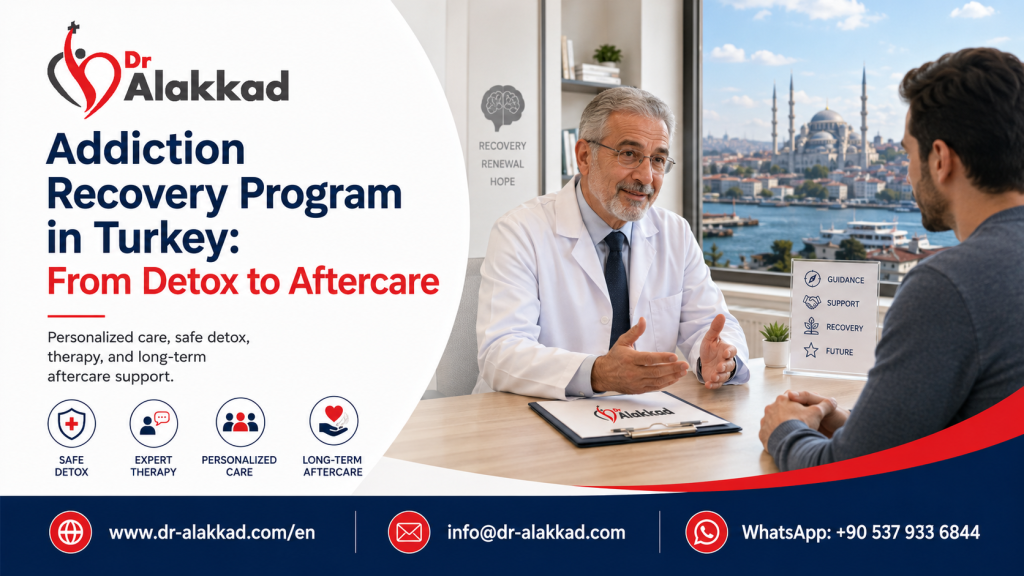
Addiction Recovery Program in Turkey: From Detox to Aftercare for International Patients
Recovery from addiction is not a single medical step. It is a structured journey that may begin with detox, continue through rehabilitation or outpatient care, and extend into aftercare, family support, mental health follow-up, and relapse prevention.
For many international patients and families, the main question is not only where to receive care. The more important question is:
What kind of recovery program does the patient actually need?
An addiction recovery program in Turkey may be considered by international patients who need an organized pathway that connects medical assessment, withdrawal support, psychological care, family guidance, and long-term recovery planning.
The goal is not only to stop substance use for a short period. The deeper goal is to help the patient understand the causes of addiction, manage emotional and behavioral triggers, rebuild daily life, and reduce the risk of relapse after returning home.
What Is an Addiction Recovery Program?
An addiction recovery program is a structured plan designed to help patients move from substance dependence toward physical, psychological, emotional, and social stability.
A complete recovery program may include:
Medical assessment
Withdrawal management or detox when needed
Psychiatric evaluation
Psychological therapy
Residential or inpatient rehabilitation
Outpatient recovery support
Dual diagnosis care when mental health symptoms are present
Family education
Relapse prevention planning
Aftercare and long-term follow-up
This is why recovery should not be reduced to one treatment session, one hospital stay, or one short detox period. Addiction affects the body, mind, behavior, family relationships, and daily routine. A strong recovery program should address these areas together.
Why International Patients May Consider Turkey for Recovery
Turkey is a common destination for international healthcare because of its geographic location, private healthcare infrastructure, medical tourism experience, and access to different specialties. For patients seeking recovery support, Turkey may offer structured medical pathways, privacy, and coordination options for patients coming from abroad.
However, choosing a recovery program should never be based only on advertisements, price, or general promises. Addiction recovery requires careful case review.
The patient’s condition should be evaluated based on:
Type of substance use
Duration of use
Previous attempts to stop
Withdrawal symptoms
Mental health condition
Physical health history
Medication use
Family situation
Relapse history
Need for inpatient or outpatient care
Follow-up needs after returning home
A responsible recovery plan begins with understanding the patient, not selling a ready-made package.
Call Us
The First Step: Case Review Before Choosing a Program
Before selecting any recovery program in Turkey, the patient’s case should be reviewed carefully. This step helps families avoid random choices and unrealistic expectations.
A case review may include:
What substance is being used?
How long has the patient been using it?
Has the patient tried treatment before?
Were there previous relapses?
Are there withdrawal symptoms?
Is there depression, anxiety, trauma, or sleep disturbance?
Does the patient need medical supervision?
Is the home environment supportive or risky?
Does the patient need inpatient care or outpatient care?
What should happen after discharge?
This review helps determine the right pathway. Some patients may need medical detox first. Others may need residential rehabilitation. Some may be suitable for outpatient care. Others may need dual diagnosis support because addiction is connected to mental health symptoms.
Stage One: Medical Detox When Needed
For some patients, the recovery journey begins with medical detox. Detox is the process of helping the body clear addictive substances while the patient receives medical supervision and support.
Medical detox may be needed when stopping the substance suddenly could cause withdrawal symptoms or medical risks.
Detox may help with:
Physical stabilization
Withdrawal support
Sleep and symptom monitoring
Medical safety
Preparing the patient for the next stage of recovery
But detox is not the full recovery program.
This is a very important point for families. A patient may finish detox and feel better physically, but the emotional, psychological, and behavioral patterns behind addiction may still remain.
After detox, the patient may still need therapy, psychiatric support, family guidance, relapse prevention, and aftercare.
The right question is not only:
Did the patient complete detox?
The better question is:
What is the recovery plan after detox?
Stage Two: Residential Rehab for Structured Recovery
Residential rehab, also known as inpatient rehabilitation, may be suitable when the patient needs a structured and protected environment away from daily triggers.
This option may be considered when:
The patient has repeated relapses
The patient cannot stop alone
The home environment is unstable
The patient needs close supervision
There are strong cravings
There are emotional or psychiatric symptoms
The patient needs intensive therapy
The family cannot safely manage the situation at home
Residential care may give the patient time and space to focus on recovery. It may also help reduce exposure to people, places, and routines connected to substance use.
However, residential rehab should not be treated as a magic solution. Its value increases when it is connected to psychological therapy, family involvement, discharge planning, and aftercare.
Stage Three: Outpatient Recovery Support
Outpatient recovery support may be suitable for selected patients who do not need full-time admission or who are stable enough to attend scheduled sessions while living outside a facility.
Outpatient care may include:
Psychological therapy
Psychiatric follow-up
Addiction counseling
Relapse prevention sessions
Family counseling
Medication review when needed
Lifestyle planning
Recovery monitoring
Outpatient programs can be useful when the patient has motivation, family support, and a relatively safe environment. They may also be part of a step-down plan after residential care.
However, outpatient recovery is not suitable for every patient. If the patient has severe withdrawal risk, repeated relapse, unsafe surroundings, or serious psychiatric symptoms, inpatient care may be more appropriate.
The decision should be made after professional assessment.
Stage Four: Dual Diagnosis Support
Many patients struggling with addiction also experience depression, anxiety, trauma, emotional instability, sleep problems, or other mental health concerns. This is often called dual diagnosis or co-occurring disorders.
In these cases, addiction recovery becomes more complex because the substance use and mental health symptoms may affect each other.
For example:
A patient may use substances to escape anxiety.
Another may use substances to numb trauma.
Another may relapse when depression becomes worse.
Another may struggle with sleep problems after detox.
If mental health symptoms are ignored, the recovery plan may remain incomplete.
Dual diagnosis support may include:
Psychiatric assessment
Therapy for emotional triggers
Medication review when appropriate
Trauma-informed care
Sleep and mood evaluation
Family education
Relapse prevention planning
The goal is to treat the person as a whole, not only the addictive behavior.
For consultation and treatment coordination with Dr. Al-Akkad:
Stage Five: Family Guidance During Recovery
Addiction does not affect the patient alone. It affects the family emotionally, financially, socially, and psychologically.
Families may feel fear, anger, guilt, shame, confusion, or exhaustion. They may want to help, but they may not know how.
Family support is important, but it must be structured.
Support does not mean pressure.
Support does not mean blaming the patient.
Support does not mean ignoring harmful behavior.
Support does not mean controlling every detail of the patient’s life.
Healthy family support may include:
Encouraging professional care
Preparing medical information
Communicating calmly
Setting healthy boundaries
Avoiding shame-based language
Participating in family counseling when available
Supporting follow-up appointments
Helping reduce relapse triggers at home
Understanding warning signs after treatment
The family’s role is not to become the treatment team. The family’s role is to support the recovery environment while professionals guide the medical and psychological process.
Stage Six: Relapse Prevention Planning
Relapse prevention is one of the most important parts of any addiction recovery program. Without it, the patient may return home after treatment and face the same environment, stress, relationships, and emotional triggers that contributed to addiction before.
A relapse prevention plan may include:
Identifying high-risk situations
Avoiding old substance-related contacts
Managing cravings
Creating a daily routine
Continuing therapy
Monitoring mental health symptoms
Planning emergency support
Involving family in a healthy way
Improving sleep and lifestyle habits
Returning gradually to work or study
Continuing follow-up care
Relapse prevention does not mean the patient is weak. It means recovery needs preparation.
Families should understand that relapse risk can increase when the patient:
Stops follow-up too early
Returns to old friends or places
Becomes isolated
Stops therapy
Experiences untreated depression or anxiety
Loses daily structure
Faces strong stress without support
A good recovery program should prepare the patient and family before these risks appear.
Stage Seven: Aftercare and Long-Term Follow-Up
Aftercare is the support that continues after the main treatment phase ends. For international patients, aftercare is especially important because the patient may return to a different country, environment, and family system.
Aftercare may include:
Online or local follow-up appointments
Psychological therapy
Psychiatric review
Medication monitoring when needed
Family guidance
Recovery coaching
Relapse prevention sessions
Support group participation
Lifestyle and routine planning
Aftercare protects the progress made during detox, rehab, or outpatient care. It helps the patient continue recovery in real life, not only inside the treatment environment.
For many patients, the period after returning home is the most sensitive stage. This is when the recovery plan is tested.
How Long Does an Addiction Recovery Program in Turkey Take?
There is no single duration that fits every patient. The length of an addiction recovery program depends on the patient’s condition and treatment needs.
The duration may depend on:
Type of substance
Length of use
Withdrawal symptoms
Physical health
Mental health condition
Previous relapse history
Need for detox
Need for inpatient care
Therapy response
Family environment
Follow-up plan
Some patients may need a short stabilization phase. Others may need weeks of structured rehab. Some may continue outpatient or aftercare support for several months.
Families should be cautious of any promise that addiction can be solved permanently in a few days. Recovery takes time, structure, and follow-up.
How Much Does an Addiction Recovery Program in Turkey Cost?
The cost of an addiction recovery program in Turkey can vary widely depending on the patient’s case and the level of care needed.
Cost may be affected by:
Initial assessment
Medical detox
Inpatient or outpatient care
Duration of stay
Medical tests
Psychiatric evaluation
Therapy sessions
Medication review
Accommodation level
Translation support
Family counseling
Aftercare planning
Follow-up services
A responsible estimate should be based on the patient’s condition, not on a general package. The cheapest option may not be suitable if the patient needs medical supervision, psychiatric care, or structured aftercare.
Families should focus on suitability, safety, and continuity of care — not price alone.
Questions Families Should Ask Before Choosing a Recovery Program
Before selecting a recovery program, families should ask:
Does the patient need medical detox?
Is inpatient rehab necessary?
Can outpatient care be enough?
Will there be psychiatric assessment?
Are mental health symptoms being addressed?
Is family guidance available?
What happens after discharge?
Is relapse prevention included?
How is aftercare planned?
What is included in the cost?
Who coordinates communication with the medical team?
Can follow-up continue after returning home?
These questions help families choose a more suitable pathway and avoid unclear or incomplete treatment decisions.
Common Mistakes Families Should Avoid
Families should avoid these common mistakes:
Choosing a program only because it is cheap
Assuming detox is enough
Ignoring depression, anxiety, or trauma
Expecting instant recovery
Stopping follow-up after discharge
Using shame or threats
Choosing a center without case review
Sending the patient abroad without a clear plan
Ignoring relapse prevention
Believing willpower alone is enough
Treating addiction as a moral failure instead of a health condition
A better approach combines compassion, boundaries, medical guidance, and a structured recovery plan.
The Role of Dr. Al-Akkad in Supporting International Patients
Choosing a recovery program abroad can be confusing for patients and families. They may not know whether the patient needs detox, inpatient rehab, outpatient care, dual diagnosis support, or aftercare.
Dr. Al-Akkad can support international patients and families by helping them organize the treatment journey more clearly.
This support may include:
Initial case review
Helping the family prepare medical information
Understanding the patient’s symptoms and history
Clarifying possible recovery pathways
Coordinating with suitable medical providers in Turkey
Explaining the difference between detox, rehab, outpatient care, and aftercare
Supporting communication with healthcare providers
Helping families ask the right medical questions
Encouraging realistic relapse prevention planning
Helping the family understand what to expect before and after treatment
The goal is not to offer unrealistic promises. The goal is to help the patient and family make a safer, clearer, and better-informed decision.
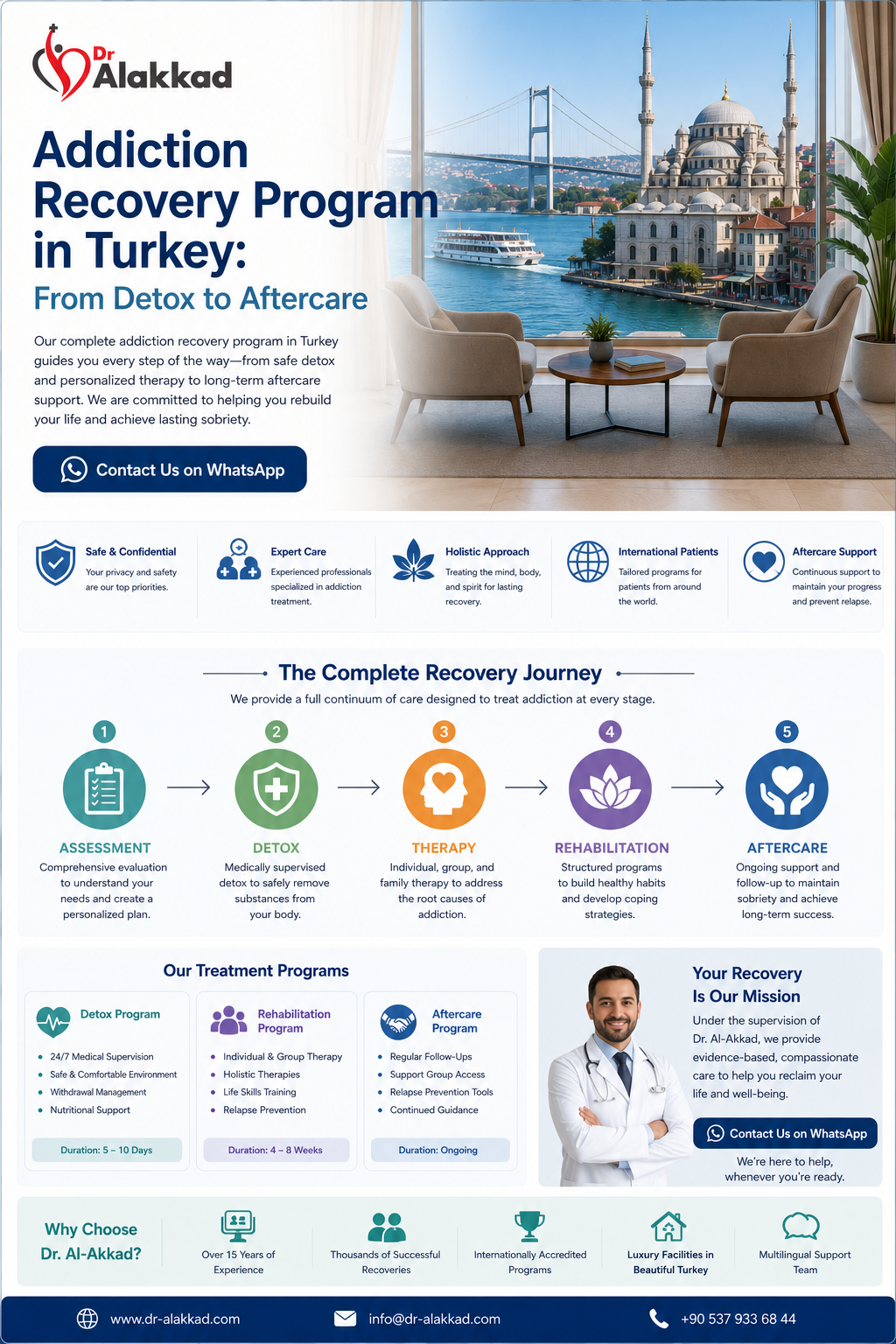
Suggested Recovery Pathway for International Patients
A practical recovery pathway may look like this:
Initial case review
Medical and psychiatric assessment
Medical detox if needed
Residential or outpatient recovery program
Psychological therapy
Dual diagnosis support when needed
Family guidance
Discharge planning
Relapse prevention
Aftercare and long-term follow-up
This pathway may change according to the patient’s condition. The key is that recovery should be planned as a connected journey, not isolated steps.
FAQ: Addiction Recovery Program in Turkey
What is an addiction recovery program?
An addiction recovery program is a structured plan that may include detox, rehabilitation, therapy, psychiatric support, family guidance, relapse prevention, and aftercare.
Is detox the same as recovery?
No. Detox may help the body clear substances, but recovery usually requires psychological support, relapse prevention, family guidance, and follow-up care.
Who may need an addiction recovery program in Turkey?
International patients may consider a recovery program in Turkey if they need organized medical and psychological support, detox, rehab, dual diagnosis care, or aftercare planning.
What is the difference between inpatient and outpatient recovery?
Inpatient recovery means the patient stays in a structured facility. Outpatient recovery allows selected stable patients to attend treatment while living outside the facility.
Does addiction recovery include mental health care?
In many cases, yes. Depression, anxiety, trauma, sleep problems, and emotional instability may need assessment and treatment as part of recovery.
How long does recovery take?
The duration depends on the patient’s substance use history, health condition, mental health symptoms, relapse risk, and treatment plan.
How much does an addiction recovery program in Turkey cost?
The cost varies depending on detox needs, inpatient or outpatient care, treatment duration, therapy, psychiatric evaluation, accommodation, and aftercare.
Can families be involved in the recovery process?
Yes. Family involvement can be helpful when it is calm, structured, and guided by professionals. Families can support follow-up, boundaries, communication, and relapse prevention.
How can Dr. Al-Akkad help?
Dr. Al-Akkad can help patients and families review the case, understand recovery options in Turkey, coordinate with suitable medical providers, and prepare for a clearer treatment journey.
Medical Disclaimer
This article is for educational purposes only. It does not replace medical evaluation, diagnosis, or treatment by a qualified doctor, psychiatrist, addiction specialist, or healthcare provider. Addiction recovery, detox, psychiatric care, and relapse prevention should always be planned with licensed professionals, especially when withdrawal symptoms, mental health concerns, or safety risks are present.
Final Thoughts
An addiction recovery program in Turkey can be a valuable option for international patients when it is planned carefully and based on the patient’s real needs. Recovery is not only about stopping substance use. It is about building a safer, healthier, and more stable life after treatment.
A complete recovery journey may include detox, inpatient or outpatient care, mental health support, family guidance, relapse prevention, and long-term aftercare.
For international patients and families, the safest first step is proper case review and organized medical coordination.
For consultation and treatment coordination with Dr. Al-Akkad:
WhatsApp: +905379336844
Suggested Internal Links
Medical Detox Treatment in Turkey
Residential Addiction Treatment in Turkey
Outpatient Addiction Treatment in Turkey
Dual Diagnosis Treatment in Turkey
Relapse Prevention After Addiction Treatment in Turkey
Family Support During Addiction Treatment in Turkey
Drug Addiction Treatment in Turkey