
Dual Diagnosis Treatment in Turkey: Addiction and Mental Health Care for International Patients
Dual Diagnosis Treatment in Turkey: Addiction and Mental Health Care for International Patients
Addiction treatment is not always successful when the focus is only on stopping substance use. In many cases, the real challenge is deeper. A patient may be struggling with anxiety, depression, trauma, emotional instability, sleep problems, or unresolved psychological pain at the same time as addiction.
This is known as dual diagnosis or co-occurring disorders. It means that a substance use disorder and a mental health condition exist together and affect each other. SAMHSA defines co-occurring disorders as the coexistence of a mental health disorder and a substance use disorder, which is why proper screening and integrated treatment are important.
For international patients, dual diagnosis treatment in Turkey may be an important option when addiction requires more than detox, temporary isolation, or short-term rehabilitation. The goal is not only to stop the substance, but to understand why the addiction started, what keeps it going, and how the patient can build a safer long-term recovery plan.
What Is Dual Diagnosis?
Dual diagnosis means that a person is dealing with two connected health problems:
A substance use disorder, such as alcohol addiction, drug addiction, or dependence on certain substances.
A mental health condition, such as depression, anxiety, trauma-related symptoms, bipolar disorder, emotional instability, or another psychiatric concern.
This does not mean that every patient with addiction has a severe mental illness. It means the patient should be evaluated as a whole person, not only through the substance they use.
A proper assessment should look at:
The type and duration of substance use
Previous treatment attempts
Emotional and psychological symptoms
Sleep and appetite changes
Family and social environment
Medical history
Current medications
Risk of relapse
Motivation for recovery
Need for inpatient or outpatient care
The World Health Organization has emphasized the connection between mental health, brain health, substance use, physical health, and overall well-being, supporting the importance of integrated approaches in complex cases.
Why Treating Addiction Alone May Not Be Enough
A common mistake is thinking that detox is the same as recovery. Detox may help the body pass through withdrawal under medical supervision, but it does not automatically treat depression, anxiety, trauma, impulsive behavior, family conflict, or relapse triggers.
This is why some patients complete treatment, feel better for a short time, then return to the same cycle after discharge. The substance may stop temporarily, but the emotional pressure behind the addiction remains untreated.
NIDA’s principles of addiction treatment explain that effective treatment should address the individual’s broader needs, not only drug use. These needs may include medical, psychological, social, vocational, and other important factors.
In dual diagnosis treatment, the question is not only:
“How do we stop the addiction?”
The deeper question is:
“What is happening inside the patient’s life, mind, body, emotions, and environment that makes recovery difficult?”
Signs You May Need Dual Diagnosis Treatment
A patient may need dual diagnosis treatment if addiction is combined with emotional or psychological symptoms. These signs do not replace medical diagnosis, but they may indicate that a deeper assessment is needed.
Common signs include:
Repeated relapse after previous addiction treatment
Depression, sadness, or loss of interest
Severe anxiety or panic symptoms
Using substances to escape stress or emotional pain
Sleep disturbance or nightmares
Strong mood changes
Social withdrawal
Family conflict linked to addiction
Loss of motivation
Difficulty controlling anger or impulsive behavior
Past trauma or unresolved emotional distress
Feeling unable to cope without the substance
Returning to substance use after stressful events
If these symptoms are present, the treatment plan should not be limited to detox. The patient may need psychiatric evaluation, psychological therapy, family support, and a structured recovery plan.
Addiction and Depression: A Common Connection
Depression and addiction can strongly influence each other. Some patients use substances to escape sadness, hopelessness, loneliness, or emotional exhaustion. Over time, substance use may worsen depression, disturb sleep, reduce motivation, and increase isolation.
This creates a difficult cycle:
The patient feels emotional pain.
The patient uses substances to escape.
The temporary relief ends.
The emotional symptoms become worse.
The patient returns to substance use again.
Dual diagnosis treatment aims to break this cycle by addressing both the addiction and the emotional condition behind it.
Addiction and Anxiety: Why the Cycle Continues
Anxiety can also play an important role in addiction. Some patients use alcohol, drugs, or other substances to feel calmer, sleep better, or avoid panic symptoms. However, this usually makes anxiety worse over time.
When the substance leaves the body, the patient may experience stronger tension, fear, irritability, or restlessness. This can push the patient back toward substance use.
In these cases, recovery requires more than willpower. The patient may need medical evaluation, therapy, coping strategies, and a safe plan to manage anxiety without returning to addictive behavior.
Trauma and Addiction
Trauma may be one of the hidden reasons behind addiction. Some patients have experienced painful events, loss, violence, displacement, severe stress, family breakdown, or emotional neglect.
They may not always speak about these experiences directly. Instead, trauma may appear through:
Sleep problems
Anger
Fear
Emotional numbness
Avoidance
Guilt
Irritability
Difficulty trusting others
Strong reactions to reminders of the past
When trauma is not addressed, addiction treatment may remain incomplete. A dual diagnosis approach allows the treatment team to understand the patient’s emotional history and build a safer plan for recovery.
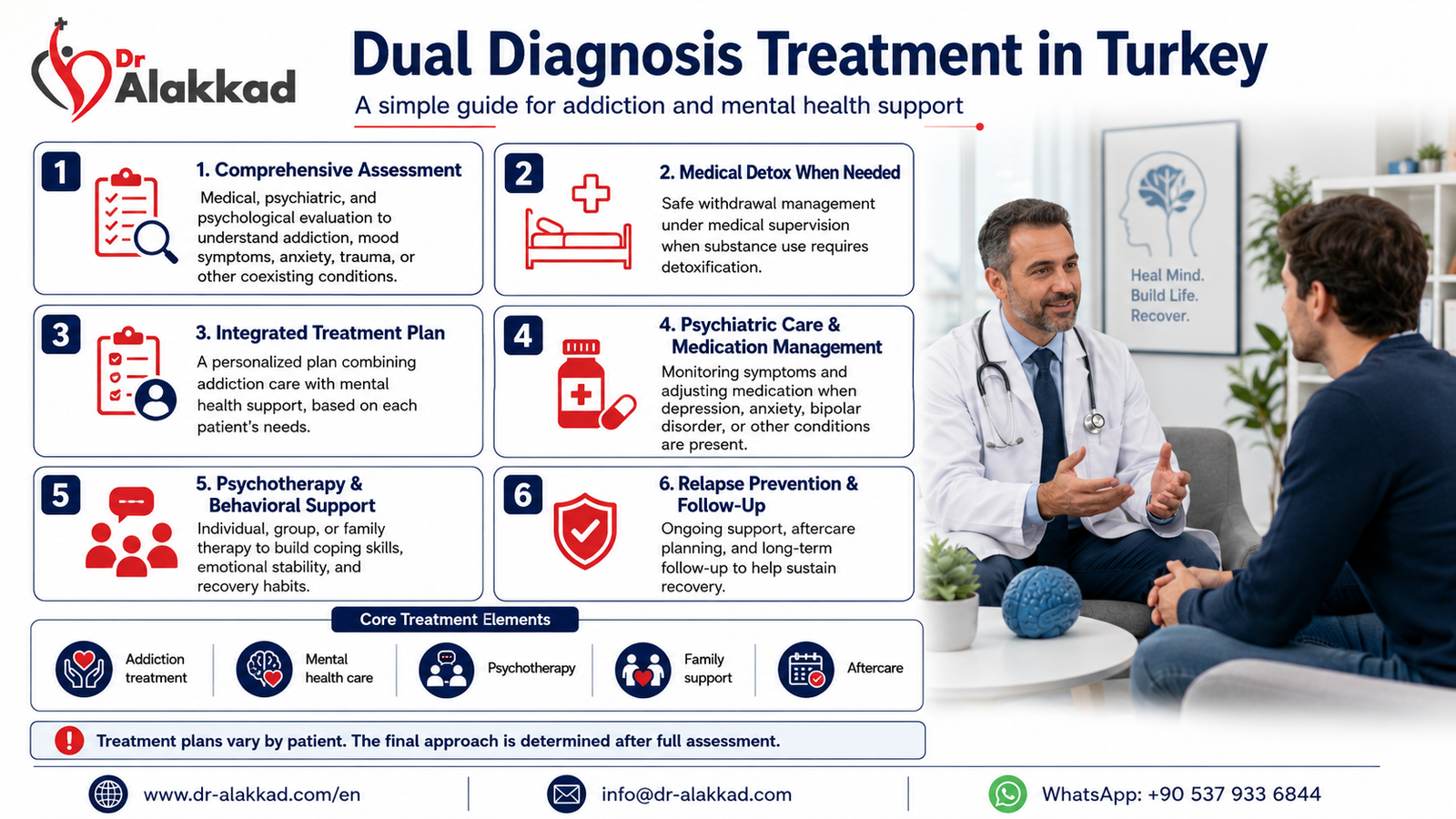
How Dual Diagnosis Treatment in Turkey Usually Works
Dual diagnosis treatment should be personalized. There is no single plan that works for every patient.
A professional treatment pathway may include the following stages.
1. Initial Case Review
Before traveling or choosing a treatment center, the patient’s case should be reviewed carefully. This may include:
Substance use history
Mental health symptoms
Previous treatments
Medical conditions
Current medications
Family concerns
Urgency of the case
Safety risks
Expected treatment goals
This stage helps avoid random decisions and helps the family understand whether the patient may need inpatient treatment, outpatient care, psychiatric assessment, or another medical pathway.
2. Psychiatric and Medical Assessment
A psychiatrist or qualified addiction specialist evaluates the patient’s mental health and addiction history. This step is important because different patients may have different needs, even if they are using the same substance.
The assessment may focus on:
Depression
Anxiety
Trauma symptoms
Mood instability
Sleep problems
Risk of relapse
Physical health
Need for medications
Need for supervised care
The goal is to create a treatment plan based on the patient’s real condition, not only on the family’s fear or the patient’s symptoms at one moment.
3. Medical Stabilization When Needed
Some patients may need supervised stabilization, especially when there are withdrawal symptoms, severe anxiety, sleep disruption, medical complications, or psychiatric concerns.
This should always be handled by qualified professionals. Patients and families should avoid attempting unsafe or unsupervised withdrawal decisions.
4. Psychological Therapy
Psychological therapy is one of the most important parts of dual diagnosis treatment. Therapy helps the patient understand:
Why substance use became a coping mechanism
What triggers relapse
How to manage cravings
How to deal with stress
How to rebuild self-control
How to communicate with family
How to prevent future relapse
NIDA notes that behavioral therapies can help patients engage in treatment, modify attitudes and behaviors related to substance use, and improve life skills that support recovery.
5. Psychiatric Treatment When Appropriate
Some patients may need medication for depression, anxiety, sleep problems, mood instability, or other psychiatric symptoms. This decision must be made by a psychiatrist after evaluation.
Medication is not suitable for every patient, and it should never be used randomly. The purpose is to support recovery, improve stability, and reduce symptoms that may increase relapse risk.
6. Family Education and Support
Addiction affects the family, not only the patient. Families may feel fear, anger, exhaustion, guilt, or confusion. Sometimes family reactions can unintentionally increase pressure on the patient.
Family education helps relatives understand:
What addiction really means
Why relapse can happen
How to support recovery without enabling harmful behavior
How to communicate with the patient
How to avoid blame and shame
How to prepare for the return home
A strong family support system can make recovery more realistic and sustainable.
7. Recovery and Relapse Prevention Plan
Recovery does not end when the patient leaves the treatment center. The most important stage may begin after returning home.
A relapse prevention plan may include:
Follow-up appointments
Psychological support
Medication review if needed
Lifestyle changes
Avoiding high-risk environments
Family communication plan
Emergency contact plan
Healthy routines
Work or study reintegration
Long-term recovery goals
Without follow-up, even a good treatment program may lose its impact after discharge.
Outpatient Addiction Treatment in Turkey: Flexible Medical Care and Recovery Support
Inpatient vs Outpatient Dual Diagnosis Treatment in Turkey
One of the most important questions families ask is:
“Does the patient need to stay inside a treatment center?”
The answer depends on the case.
Inpatient Treatment
Inpatient treatment may be suitable when the patient needs a structured environment, medical supervision, psychological support, and distance from relapse triggers.
It may be considered when:
The patient has repeated relapse
Home environment is unsafe or unstable
Withdrawal symptoms require supervision
Psychiatric symptoms are significant
The patient cannot control substance use alone
The family cannot manage the situation safely
Outpatient Treatment
Outpatient treatment may be suitable when the patient is medically stable and can attend regular sessions while living outside the center.
It may be considered when:
The patient has strong family support
The addiction severity is lower
There is no urgent medical risk
The patient can attend appointments consistently
The patient is motivated and cooperative
The doctor believes outpatient care is safe
The decision should always be made after professional evaluation.
How Much Does Dual Diagnosis Treatment Cost in Turkey?
The cost of dual diagnosis treatment in Turkey can vary widely. It depends on the patient’s condition, the type of facility, the treatment duration, and whether inpatient care is needed.
Factors that may affect cost include:
Initial psychiatric assessment
Medical tests
Duration of stay
Inpatient or outpatient program
Type of accommodation
Medication if required
Psychological therapy sessions
Translation support
Follow-up plan
Additional medical services
Patients should be careful with very general price promises. A responsible cost estimate should come after reviewing the case and understanding the real treatment needs.
This is one of the reasons international patients may benefit from medical coordination before travel. A clear review can help the family avoid confusion, unnecessary costs, or unsuitable treatment choices.
Why Turkey Is Considered by International Patients
Turkey has become a major destination for international healthcare because of its developed private medical sector, geographic accessibility, and experience in receiving patients from different countries.
For dual diagnosis cases, the value is not only in traveling to Turkey. The real value is in building the right treatment pathway:
Choosing the suitable medical provider
Understanding whether inpatient or outpatient care is needed
Preparing the family before treatment
Clarifying expected costs
Supporting communication with medical teams
Planning follow-up after discharge
The Role of Dr. Al-Akkad in Supporting International Patients
Choosing addiction treatment abroad can be stressful. Families often ask:
Which clinic is suitable?
Does the patient need inpatient treatment?
Is detox enough?
What if the patient also has depression or anxiety?
How much will treatment cost?
How can we communicate with the medical team?
What happens after the patient returns home?
Dr. Al-Akkad can support international patients and families by helping them understand the case, organize the first steps, and coordinate with suitable medical providers in Turkey.
The role may include:
Initial case review
Understanding the patient’s symptoms and history
Helping the family prepare medical information
Coordinating with suitable healthcare providers
Explaining possible treatment pathways
Clarifying the difference between detox, rehabilitation, and dual diagnosis care
Supporting communication before and during the treatment journey
Helping families ask the right medical questions
Providing guidance without unrealistic promises
The purpose is to help the patient and family make a safer, clearer, and better-informed decision.
Why Dual Diagnosis Treatment Requires a Personalized Plan
No two addiction cases are exactly the same.
One patient may need detox and psychiatric care.
Another may need trauma-focused therapy.
Another may need depression treatment.
Another may need family intervention.
Another may need long-term outpatient follow-up.
This is why dual diagnosis treatment should not be chosen only by reading advertisements or comparing prices. The treatment plan must be based on the patient’s medical and psychological condition.
Common Mistakes Families Should Avoid
Families often act out of fear, which is understandable. However, some decisions may harm the treatment journey.
Avoid these mistakes:
Choosing a center only because it is cheaper
Assuming detox is enough
Ignoring depression or anxiety
Forcing treatment without proper preparation
Stopping follow-up after discharge
Blaming the patient instead of understanding the condition
Choosing a treatment plan without psychiatric evaluation
Believing that one short program can solve everything permanently
Recovery is possible, but it needs a realistic plan.
FAQ: Dual Diagnosis Treatment in Turkey
What is dual diagnosis treatment?
Dual diagnosis treatment is a medical and psychological approach for patients who have both addiction and a mental health condition, such as depression, anxiety, trauma symptoms, or mood instability.
Can addiction and depression be treated together?
Yes. In many cases, addiction and depression should be assessed and treated together because each condition can worsen the other.
Is detox enough for dual diagnosis?
Usually, detox alone is not enough. Detox may help with physical withdrawal, but dual diagnosis treatment also addresses psychological symptoms, emotional triggers, and relapse prevention.
Is dual diagnosis treatment available in Turkey?
Yes, international patients may find addiction and mental health treatment options in Turkey, but the right provider and treatment pathway should be selected carefully after reviewing the patient’s condition.
How long does dual diagnosis treatment take?
The duration depends on the patient’s condition, addiction severity, mental health symptoms, and whether inpatient or outpatient care is needed. Some patients need short-term stabilization, while others need longer treatment and follow-up.
Does every patient need inpatient treatment?
No. Some patients may need inpatient care, while others may be suitable for outpatient treatment. The decision depends on medical and psychiatric evaluation.
How can Dr. Al-Akkad help?
Dr. Al-Akkad can help international patients and families review the case, understand possible treatment options, coordinate with suitable medical providers in Turkey, and organize the treatment journey more clearly.
Medical Disclaimer
This article is for educational purposes only. It does not replace medical evaluation, diagnosis, or treatment by a qualified psychiatrist, addiction specialist, or healthcare provider. Addiction and mental health conditions should always be assessed by licensed professionals, especially when withdrawal symptoms, severe depression, anxiety, or safety concerns are present.
Addiction Treatment in Turkey – MAT Program
Final Thoughts
Dual diagnosis treatment in Turkey may be an important option for patients who need addiction care together with mental health support. The most effective approach is not to treat addiction as an isolated problem, but to understand the patient’s emotional, psychological, medical, and family situation.
For international patients, the first step should be careful case review and proper medical coordination. With the support of Dr. Al-Akkad, patients and families can better understand the available options in Turkey and move toward a safer, clearer, and more organized treatment journey.
For consultation and treatment coordination with Dr. Al-Akkad:
WhatsApp: +905379336844
Website: WWW.DR-ALAKKAD.COM