
Long-Term Addiction Treatment in Turkey: Relapse Prevention and Aftercare Planning
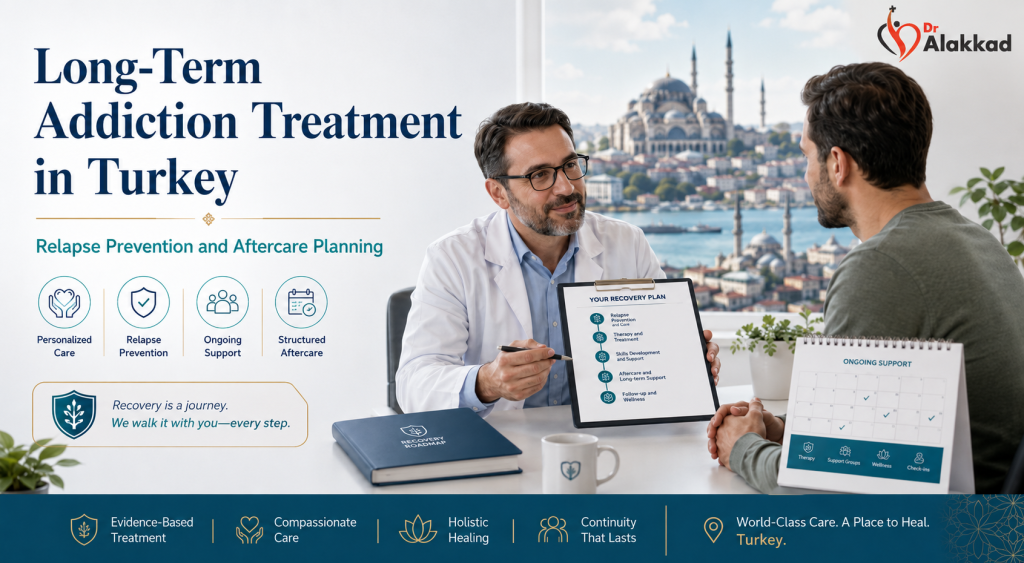
Long-Term Addiction Treatment in Turkey: Relapse Prevention and Aftercare Planning
Addiction recovery does not end when detox is completed. It does not end when a patient leaves a residential treatment center. It does not even end when the patient feels better for a few weeks. True recovery requires long-term planning, continued support, relapse prevention, family understanding, and a realistic aftercare plan.
This is why long-term addiction treatment in Turkey can be an important option for international patients who need more than a short medical intervention. For many patients and families, the real challenge begins after the first stage of treatment: returning to daily life, facing stress, rebuilding relationships, avoiding old triggers, and maintaining progress over time.
Modern addiction care recognizes that substance use disorders are treatable health conditions, but recovery usually requires ongoing support and individualized care. NIDA explains that addiction can be treated successfully and that research-based methods can help people stop using substances and return to productive functioning.
For private guidance and treatment coordination in Turkey, contact Dr. Al-Akkad through WhatsApp:
Contact Dr. Al-Akkad on WhatsApp
Why Long-Term Addiction Treatment Matters
Many families focus only on the first step: stopping alcohol or drug use. This is understandable because the visible crisis often looks like the most urgent problem. But stopping use is not the same as building recovery.
A patient may stop for days, weeks, or even months, then return to the same behavior when stress, loneliness, family conflict, anxiety, depression, or old social circles appear again. This is why relapse prevention and aftercare planning are essential parts of addiction treatment.
The WHO and UNODC international standards describe treatment systems for drug use disorders as including different treatment settings, interventions, and care components, including continuing care and support for patients with different needs.
Long-term treatment is not about keeping the patient in treatment forever. It is about building a clear recovery structure that continues after the first stage.
What Is Long-Term Addiction Treatment?
Long-term addiction treatment is a structured recovery approach that continues beyond detox or short-term rehabilitation. It may include therapy, psychiatric follow-up, relapse prevention planning, family support, medication review when appropriate, lifestyle rebuilding, and online or in-person follow-up.
A long-term plan may include:
Medical and psychiatric review
Individual therapy
Family counseling
Relapse prevention sessions
Lifestyle and routine rebuilding
Follow-up after residential treatment
Online support after returning home
Medication monitoring when clinically appropriate
Emergency planning for high-risk moments
Gradual return to work, study, or family life
NIDA’s principles of effective treatment emphasize that treatment should address the patient’s multiple needs, not only substance use, and that treatment plans should be assessed and modified as the patient’s needs change.
This is one of the most important points in addiction care: recovery is not one fixed program for every patient. It is a changing plan that should respond to the patient’s progress.
Why Relapse Prevention Is Not Optional
Relapse prevention is the process of identifying risks before they become crises. It helps the patient recognize warning signs, avoid high-risk situations, manage cravings, and ask for help early.
Relapse does not usually happen suddenly. It often starts with emotional changes, stress, isolation, overconfidence, stopping therapy, returning to old relationships, or ignoring early warning signs. A strong relapse prevention plan helps the patient and family respond before the situation becomes dangerous.
Clinical addiction references describe relapse prevention as an important part of recovery because people recovering from addiction may experience relapse risks, and prevention planning helps reduce that risk.
A relapse prevention plan is not a sign of weakness. It is a sign of serious recovery.
Why International Patients Need Aftercare Planning
International patients often travel for treatment because they need privacy, structured care, medical coordination, or distance from daily triggers. But once they return home, they may face the same environment that contributed to the addiction.
This makes aftercare especially important.
Aftercare planning helps answer key questions:
Who will follow up with the patient after returning home?
How will therapy continue?
What should the family do if cravings return?
What situations should the patient avoid?
Is online follow-up needed?
Does the patient need psychiatric review?
How will relapse warning signs be identified?
What daily routine will support recovery?
Without aftercare, treatment may become a temporary pause rather than a real recovery process.
Long-Term Treatment After Detox
Detox may be necessary for some patients, especially when there is physical dependence. But detox alone is not enough.
Detox helps the body pass the first medical stage. It does not automatically treat psychological triggers, emotional pain, stress patterns, trauma, family conflict, or unhealthy habits. After detox, many patients still need therapy, psychiatric evaluation, relapse prevention, and follow-up.
This is why patients and families should avoid thinking that “the substance is out of the body, so the problem is solved.” Addiction recovery requires deeper work.
A strong long-term plan after detox may include:
Therapy sessions
Medication review when appropriate
Sleep and mood assessment
Family education
Craving management
Relapse prevention planning
Follow-up appointments
Daily routine building
This stage is where many patients either begin real recovery or slowly return to old patterns.
Long-Term Treatment After Residential Rehab
Residential addiction treatment can provide a protected environment, daily structure, therapy, medical supervision, and distance from triggers. But the patient will eventually leave that environment.
The transition after residential rehab is one of the most important moments in recovery.
The patient may return to:
Family pressure
Work stress
Financial problems
Old friends
Loneliness
Relationship conflict
Easy access to substances
Unstructured free time
Emotional triggers
This is why residential care should always include discharge planning and continuing care. WHO and UNODC standards discuss treatment systems that include structured care, psychosocial treatment, and continuing support after residential treatment.
A good discharge plan should not simply say “avoid relapse.” It should clearly explain how the patient will continue recovery after leaving the center.
Long-Term Treatment After Outpatient Care
Outpatient addiction treatment can be helpful for stable patients who do not need full residential admission. It may include therapy, psychiatric visits, medication review, family support, and regular follow-up.
But outpatient treatment also requires discipline. Since the patient is not inside a controlled environment, relapse risks may appear during daily life.
For this reason, outpatient treatment should include:
Regular appointment schedule
Clear therapy goals
Family involvement when appropriate
Relapse warning signs
Crisis plan
Lifestyle structure
Progress monitoring
Online follow-up when needed
SAMHSA explains that substance use disorder treatment can include medications, counseling, behavioral therapies, and recovery support depending on the patient’s needs.
This means outpatient care should not be casual. It should be organized, monitored, and connected to a long-term recovery plan.
Core Elements of a Relapse Prevention Plan
A relapse prevention plan should be practical, personal, and easy to follow. It should not be a general list copied from the internet. It should match the patient’s real life, risks, and environment.
A strong relapse prevention plan may include:
1. Personal Triggers
The patient should identify situations that increase the risk of returning to substance use or addictive behavior. These may include stress, anger, loneliness, certain friends, financial pressure, family conflict, sleep problems, or emotional pain.
2. Warning Signs
Warning signs may include missing appointments, isolating from family, romanticizing past behavior, hiding emotions, returning to old social circles, or refusing support.
3. Support Contacts
The patient should know who to contact when cravings or emotional pressure increase. This may include a doctor, therapist, family member, recovery supporter, or treatment coordinator.
4. Daily Routine
A stable daily routine can reduce relapse risk. Sleep, meals, movement, work, study, therapy, and family time should be organized.
5. Therapy Continuation
Therapy helps the patient continue working on emotional triggers, coping skills, and behavior change.
6. Family Boundaries
Families should know how to support without enabling harmful behavior. Boundaries are part of recovery.
7. Emergency Steps
The patient and family should know what to do if relapse risk becomes serious or if the patient becomes medically or psychologically unstable.
The Role of Therapy in Long-Term Recovery
Therapy is one of the strongest parts of long-term addiction treatment. It helps the patient understand why addiction developed and how to respond differently to stress, cravings, and emotional pain.
Therapy may help with:
Anxiety
Depression
Trauma-related symptoms
Anger
Guilt and shame
Relationship problems
Cravings
Low self-esteem
Family conflict
Behavioral patterns
Addiction often becomes a way to escape pain, pressure, or emotional instability. Therapy helps the patient build healthier ways to respond.
Long-term therapy also helps the patient stay accountable. Recovery can weaken when the patient feels “I am fine now” and stops support too early.
Family Support and Aftercare
Family support can be one of the strongest protective factors in recovery, but it must be guided. Families often want to help, but they may act through fear, anger, or exhaustion.
A family may unintentionally harm recovery by:
Blaming the patient constantly
Monitoring aggressively
Ignoring warning signs
Paying for harmful behavior
Creating emotional conflict
Expecting instant change
Refusing therapy or education
Healthy family support may include:
Encouraging follow-up care
Avoiding humiliation
Learning relapse warning signs
Setting boundaries
Supporting healthy routines
Reducing conflict
Participating in family counseling when appropriate
Contacting professionals when needed
Recovery is not only the patient’s responsibility. The environment around the patient matters.
Online Follow-Up for International Patients
Online follow-up can be very useful for international patients after leaving Turkey. A patient may complete treatment in Turkey, return home, and still need regular support.
Online follow-up may include:
Recovery progress review
Family guidance
Relapse prevention support
Therapy coordination
Medication review reminders
Planning next steps
Monitoring emotional stability
Helping the patient stay connected to care
SAMHSA describes recovery as a process of change through which people improve health and wellness, live self-directed lives, and work toward reaching their full potential.
For international patients, online follow-up can help maintain that process after travel ends.
Long-Term Addiction Treatment in Turkey for Drug Addiction
Patients recovering from drug addiction often need continued support after the first treatment stage. This is especially true when there have been repeated relapses, long-term use, mental health concerns, or unstable social surroundings.
Long-term drug addiction treatment may include:
Therapy
Psychiatric follow-up
Medication-assisted treatment when appropriate
Relapse prevention
Family education
Lifestyle rebuilding
Online follow-up
Avoidance of high-risk environments
For opioid addiction and some other substance use disorders, medications may be part of treatment when prescribed and monitored by qualified professionals. SAMHSA explains that medications can be used to treat substance use disorders, support recovery, and reduce overdose risk in appropriate cases.
Medication decisions must always be made by qualified doctors. Patients should not start, stop, or change medication on their own.
Long-Term Addiction Treatment in Turkey for Alcohol Addiction
Alcohol addiction also requires long-term planning. Some patients complete detox but return to drinking when stress, social pressure, or emotional pain returns.
Long-term alcohol addiction treatment may include:
Therapy
Psychiatric care
Medication review when appropriate
Family counseling
Lifestyle planning
Sleep and mood support
Relapse prevention
Regular follow-up
For many patients, alcohol is connected to habit, social life, stress, and emotional coping. Long-term care helps the patient build a new structure that does not depend on alcohol.
Families should also understand that alcohol withdrawal can be medically risky in some cases, so stopping suddenly without medical guidance may not be safe for dependent patients.
How Dr. Al-Akkad Supports Long-Term Recovery Planning
Dr. Al-Akkad helps international patients and families approach addiction treatment in Turkey with a long-term view, not only a short treatment visit.
This support may include:
Reviewing the patient’s condition
Understanding addiction history and relapse patterns
Helping determine whether detox, residential care, or outpatient treatment is needed
Coordinating with suitable medical providers in Turkey
Explaining follow-up needs after treatment
Helping families understand relapse prevention
Supporting online follow-up planning after returning home
Encouraging realistic expectations for recovery
The goal is not to promise instant results. The goal is to help the patient and family build a safer, more organized, and more sustainable recovery path.
For confidential consultation:
Contact Dr. Al-Akkad on WhatsApp
When Is Long-Term Addiction Treatment Needed?
Long-term addiction treatment may be especially important when:
The patient has relapsed before
The addiction has continued for years
The patient has anxiety or depression
The patient’s environment contains triggers
The family does not know how to manage the situation
The patient completed detox but still has cravings
There is a history of residential treatment followed by relapse
The patient needs follow-up after returning from Turkey
There are relationship, work, or lifestyle problems connected to addiction
A patient does not need to wait for a crisis to plan long-term care. Early planning can prevent serious setbacks.
Long-Term Addiction Treatment in Turkey: Step-by-Step
Step 1: Private Contact
The patient or family contacts Dr. Al-Akkad through WhatsApp and explains the situation confidentially.
Start a Private WhatsApp Consultation
Step 2: Case Review
The patient’s addiction history, previous treatment attempts, relapse patterns, health condition, and family environment are reviewed.
Step 3: Treatment Direction
The patient may be guided toward detox, residential treatment, outpatient care, therapy, psychiatric evaluation, or online follow-up depending on the case.
Step 4: Relapse Prevention Planning
A relapse prevention plan is developed around the patient’s triggers, warning signs, family role, daily routine, and follow-up needs.
Step 5: Aftercare and Follow-Up
After treatment in Turkey, continued support helps the patient maintain recovery and respond early to risks.
Why Long-Term Recovery Is More Realistic Than “Quick Cure” Promises
Families are often desperate for fast results. This makes them vulnerable to unrealistic promises. But addiction treatment should not be marketed as a guaranteed quick cure.
A responsible recovery plan is honest. It recognizes that:
Recovery takes time
Relapse risk must be managed
Mental health matters
Family support matters
The environment matters
Follow-up matters
Treatment may need adjustment
The patient’s motivation may change over time
ASAM describes its criteria as using a holistic, person-centered approach to developing treatment plans for patients with addiction and co-occurring conditions.
This is the right mindset: treatment should follow the patient’s needs, not a fixed promise.
Final Thoughts
Long-term addiction treatment in Turkey may be a valuable option for international patients who need more than detox or a short rehabilitation stay. Real recovery requires relapse prevention, aftercare planning, therapy, family support, psychiatric follow-up when needed, and continued monitoring after returning home.
The first stage of treatment may stop the crisis. The long-term plan helps protect recovery.