
IVF Treatment in Turkey
IVF Treatment in Turkey
IVF Technologies, Treatment Protocols, and Success Factors
(A Doctor-Led, Evidence-Based Guide for International Patients)
Introduction: IVF Success Depends on More Than the Clinic
Many couples assume that IVF success depends mainly on where the procedure is performed.
In reality, IVF outcomes are influenced far more by how the treatment protocol is selected, how the laboratory operates, and how well the patient is medically prepared.
This section explains:
-
The IVF technologies available in Turkey
-
The most commonly used treatment protocols
-
The key medical factors that influence IVF success
-
Why protocol selection must be individualized
Core IVF Technologies Available in Turkey
Turkey’s fertility centers are equipped with modern assisted reproductive technologies comparable to those used in leading international programs.
1. ICSI – Intracytoplasmic Sperm Injection
ICSI is widely used in IVF, particularly when:
-
Male factor infertility is present
-
Fertilization failure occurred in previous IVF cycles
It involves injecting a single sperm directly into the egg, increasing fertilization rates in selected cases.
Important:
ICSI is not automatically superior to conventional IVF for all patients.
Medical indication must guide its use.
2. Advanced Embryo Culture Systems
Modern IVF laboratories in Turkey use:
-
Extended embryo culture to the blastocyst stage
-
Controlled incubator environments
-
Continuous embryo monitoring (time-lapse systems in selected centers)
These technologies help embryologists select embryos with the highest implantation potential.
3. Preimplantation Genetic Testing (PGT)
PGT may be recommended in cases of:
-
Recurrent implantation failure
-
Recurrent miscarriage
-
Advanced maternal age
-
Known genetic disorders
PGT helps identify chromosomally normal embryos, potentially improving implantation rates and reducing miscarriage risk.
However, PGT is not necessary for every IVF case and must be used selectively.
4. Cryopreservation (Freezing Techniques)
Turkey uses modern cryopreservation methods such as:
-
Vitrification for embryos and eggs
-
Sperm freezing
Frozen embryo transfer (FET) cycles often result in:
-
Better uterine preparation
-
Reduced ovarian stimulation stress
-
Comparable or higher success rates in selected patients
-
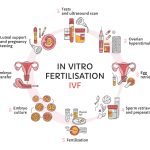
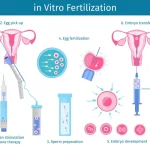
- In Vitro fertilization IVF vector circle infographic, infertility treatment scheme. Ovarian hyperstimulation, artificial insemination, embryo culture, luteal support. Medical procedure for pregnancy

IVF Treatment Protocols: Why One Size Does Not Fit All
IVF protocols are tailored based on:
-
Age
-
Ovarian reserve (AMH, AFC)
-
Hormonal profile
-
Previous IVF response
-
Medical history
Common Protocol Categories Include:
1. Conventional Stimulation Protocols
Used for patients with:
-
Normal ovarian reserve
-
Predictable response to stimulation
2. Mild or Minimal Stimulation Protocols
Used in:
-
Patients with low ovarian reserve
-
Patients at risk of ovarian hyperstimulation
3. Antagonist vs Agonist Protocols
Selection depends on:
-
Hormonal response patterns
-
Risk profile
-
Timing considerations
Protocol selection has a direct impact on egg quality, embryo development, and safety.
Factors That Most Strongly Influence IVF Success
1. Female Age
Age remains the strongest predictor of IVF success.
-
Egg quality declines with age
-
Chromosomal abnormalities increase after age 35
No technology can fully overcome the biological effect of age.
2. Ovarian Reserve
Markers such as:
-
AMH
-
Antral follicle count
help predict:
-
Response to stimulation
-
Number of eggs retrieved
Low ovarian reserve requires realistic expectations and carefully designed protocols.
3. Sperm Quality
Male factor infertility contributes to infertility in a significant proportion of cases.
Even with ICSI:
-
Severe DNA fragmentation
-
Genetic abnormalities
can reduce success rates.
4. Embryology Laboratory Quality
The IVF laboratory plays a critical role in:
-
Fertilization
-
Embryo development
-
Embryo selection
Laboratory standards often make the difference between success and failure.
5. Uterine Factors
Successful implantation requires:
-
Adequate endometrial thickness
-
Absence of uterine pathology
-
Proper hormonal synchronization
These factors must be evaluated before embryo transfer.
Why Success Rates Alone Can Be Misleading
Online IVF success rates often:
-
Combine different patient populations
-
Ignore age and diagnosis differences
-
Reflect selected cases only
Ethical IVF counseling focuses on individualized prognosis, not generic statistics.
How Dr. Al-Akkad Evaluates IVF Suitability and Protocol Choice
Dr. Al-Akkad’s role is to ensure that:
-
IVF is medically justified
-
The proposed protocol matches patient biology
-
Expectations are realistic
-
Risks are clearly explained
His guidance includes:
-
Reviewing fertility investigations
-
Identifying correct treatment pathway
-
Explaining alternative options when IVF is not optimal
Success begins with choosing the right protocol — not the most aggressive one.
Safety Considerations in IVF Treatment Abroad
Safety assessment includes:
-
Risk of ovarian hyperstimulation
-
Medical contraindications to pregnancy
-
Travel timing and physical readiness
-
Emotional and psychological readiness
Doctor-led oversight protects patients from unnecessary medical risk.
Scientific & Medical References
-
European Society of Human Reproduction and Embryology (ESHRE)
ART treatment protocols and laboratory standards
https://www.eshre.eu -
American Society for Reproductive Medicine (ASRM)
IVF technologies and clinical guidelines
https://www.asrm.org -
Centers for Disease Control and Prevention (CDC)
IVF success factors and limitations
https://www.cdc.gov/art -
National Institutes of Health (NIH)
Embryo culture and assisted reproductive technologies
https://www.ncbi.nlm.nih.gov————————————————————————————————————————————————————————-

IVF Treatment in Turkey
Patient Selection, Risk Assessment, Medical Accompaniment, and Long-Term Follow-Up
(A Doctor-Led, Ethical Framework for International IVF Care)
Introduction: IVF Success Begins With Choosing the Right Patient
IVF outcomes are not determined by technology alone.
They depend on who undergoes treatment, when it is performed, and how risks are managed before, during, and after the cycle.
This final part explains:
-
How patients are selected responsibly for IVF abroad
-
Which risks must be assessed and mitigated
-
Why medical accompaniment is critical
-
How long-term follow-up protects outcomes and patient well-being
Patient Selection: The Foundation of Responsible IVF
Who Is an Appropriate Candidate for IVF Abroad?
IVF treatment abroad may be appropriate for patients who:
-
Have completed a thorough fertility evaluation
-
Have a clear medical indication for IVF
-
Are medically stable and fit for travel
-
Understand realistic success probabilities
-
Can commit to follow-up and continuity of care
Appropriate selection aligns medical feasibility with patient expectations.
Who May Not Be an Ideal Candidate?
IVF abroad may not be appropriate for patients who:
-
Have untreated medical conditions affecting pregnancy safety
-
Have extremely diminished ovarian reserve with unrealistic expectations
-
Require urgent medical intervention unrelated to fertility
-
Are unable to complete follow-up or monitoring
Responsible care includes advising against IVF when the likelihood of benefit is low.
Risk Assessment in IVF: An Essential Safety Step
Risk assessment is often overlooked in fertility travel decisions.
Key Risks to Evaluate Include:
1. Ovarian Hyperstimulation Syndrome (OHSS)
-
More common in high responders
-
Can be prevented with appropriate protocol selection
-
Requires medical monitoring and readiness
2. Multiple Pregnancy
-
Increases risks for mother and babies
-
Reduced through single-embryo transfer strategies
-
Requires clear counseling and agreement
3. Travel-Related Risks
-
Timing of travel relative to stimulation and transfer
-
Physical strain during treatment
-
Access to emergency care if needed
Risk-aware planning reduces complications and improves safety.
The Importance of Medical Accompaniment in IVF Abroad
Medical accompaniment is not logistical support—it is clinical oversight.
What Medical Accompaniment Provides:
-
Review of treatment decisions
-
Interpretation of medical findings
-
Monitoring response to stimulation
-
Guidance during critical decision points
-
Protection against unnecessary escalation
This oversight ensures that IVF care remains patient-centered and medically justified.
The Role of Dr. Al-Akkad in IVF Treatment Abroad
Dr. Al-Akkad’s role is to guide patients through IVF as a medical journey, not a transaction.
His involvement includes:
-
Reviewing fertility investigations before treatment
-
Assessing IVF suitability and expected outcomes
-
Guiding protocol selection based on patient biology
-
Monitoring progress during treatment
-
Advising on next steps after cycle completion
The objective is not to start IVF quickly — it is to start IVF correctly.
Managing Expectations: A Critical Part of Ethical IVF Care
IVF success rates vary significantly based on:
-
Age
-
Diagnosis
-
Ovarian reserve
-
Embryo quality
Ethical IVF counseling includes:
-
Transparent discussion of probabilities
-
Clear explanation of limitations
-
Avoidance of guaranteed outcomes
Patients deserve clarity, not promises.
Completion of Treatment: What Patients Should Receive
At the end of an IVF cycle, patients should have:
-
A clear medical summary
-
Explanation of cycle outcome
-
Guidance on next steps
-
Recommendations for future attempts if needed
This documentation supports continuity of care and informed decision-making.
Long-Term Follow-Up and Continuity of Care
IVF treatment does not end with embryo transfer.
Follow-up includes:
-
Pregnancy monitoring if successful
-
Assessment after unsuccessful cycles
-
Coordination with local healthcare providers
-
Emotional and psychological support when needed
Long-term follow-up preserves both medical outcomes and patient well-being.
Integrating Local and International Fertility Care
Safe IVF abroad requires integration, not isolation.
A responsible model includes:
-
Communication with local physicians
-
Shared medical documentation
-
Coordinated follow-up plans
-
Clear emergency pathways
This integration reduces gaps and enhances patient safety.
Avoiding Common Pitfalls in International IVF
Patients should be cautious of:
-
Clinics offering universal success claims
-
Fixed IVF packages without diagnosis
-
Pressure to start immediately
-
Lack of post-cycle follow-up planning
These are indicators of commercialized care, not medicine.
Final Perspective: IVF Is a Journey That Requires Guidance
IVF is a complex medical and emotional journey.
When guided responsibly, it can offer meaningful hope.
When rushed or poorly selected, it can cause unnecessary harm.
Doctor-led guidance ensures that:
-
IVF is medically justified
-
Risks are managed
-
Decisions are informed
-
Patients are supported throughout

Conclusion: Making IVF Decisions With Confidence and Care
Choosing IVF treatment in Turkey should be the result of:
-
Medical evaluation
-
Individualized planning
-
Ethical counseling
-
Continuous medical oversight
Not marketing pressure or urgency.
Patients deserve responsible fertility care, wherever treatment occurs.
Scientific & Medical References
-
European Society of Human Reproduction and Embryology (ESHRE)
Guidelines on ovarian stimulation, embryo transfer, and patient safety
https://www.eshre.eu -
American Society for Reproductive Medicine (ASRM)
Patient selection and ethical practice in assisted reproduction
https://www.asrm.org -
World Health Organization (WHO)
Infertility management and reproductive health
https://www.who.int -
National Institutes of Health (NIH)
Risks, outcomes, and follow-up in IVF treatment
https://www.ncbi.nlm.nih.gov