
Liver and kidney transplantation in Turkey
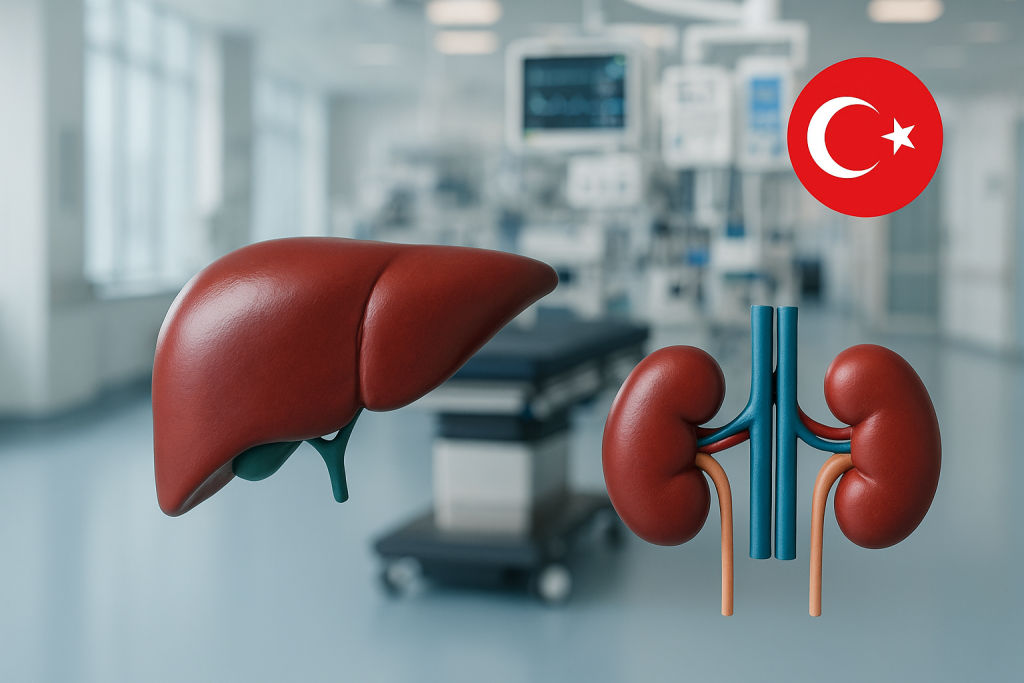
Liver and Kidney Transplantation in Turkey – The Comprehensive 2025 Medical Guide Supervised by Dr. Al-Akkad
Organ transplantation—particularly liver and kidney transplantation—is among the most successful life-saving interventions, dramatically improving quality of life for patients with end-stage organ failure. Turkey stands out for its advanced medical infrastructure, specialized surgical programs, and strict quality and clinical-follow-up standards, making it a top destination for international patients seeking high-level outcomes at competitive costs. This guide is based on the latest global guidelines (AASLD for liver, KDIGO for kidney) and findings from peer-reviewed medical databases.
Section 1: Liver Transplantation in Turkey
1) When is liver transplantation indicated?
It is recommended for patients with end-stage liver failure due to advanced cirrhosis (of any cause), selected primary liver tumors (within Milan criteria for hepatocellular carcinoma), or acute hepatic failure unresponsive to medical therapy. The American Association for the Study of Liver Diseases (AASLD) defines listing criteria, comprehensive pre-transplant assessment, and “bridging” therapies to maintain eligibility while awaiting surgery.
→ Request an eligibility assessment with Dr. Al-Akkad to determine if you should be listed for transplantation.
2) Donor pathways: living vs. deceased donors
In Turkey, transplants are performed from both living donors (right/left lobe hepatectomy) and brain-dead donors. Comparative research shows lower donor morbidity for left-lobe donation without compromising long-term recipient survival, provided small-for-size syndrome (SFSS) is managed via graft-to-recipient weight ratio (GRWR) calculations and tailored surgical techniques. Meta-analyses (2022–2025) confirm selective safety and outcome improvements with left-lobe donation.
→ Consult Dr. Al-Akkad to choose between right- and left-lobe donation strategies using GRWR and vascular imaging.
3) Pre-transplant evaluation
- MELD score for disease severity and priority.
- Full laboratory panel, CT/MRI for hepatic and vascular mapping, cardiac/pulmonary/renal assessments, and infectious-disease screening.
- Nutritional and psychological preparation under a multidisciplinary transplant team.
- Bridging protocols for hepatocellular carcinoma to maintain candidacy.
AASLD 2023–2025 guidelines also detail rejection management and biliary/vascular complications.
→ Schedule your complete pre-transplant workup in Turkey under Dr. Al-Akkad’s supervision with a fast-track plan for international patients.
4) The surgery—overview
The diseased liver tissue is replaced by a healthy lobe from the donor, reconnecting blood vessels and bile ducts under strict aseptic and anesthetic monitoring. ICU stay lasts several days for enzyme and flow surveillance. Early and late follow-up protocols adhere to AASLD recommendations.
→ Coordinate your surgery date and postoperative care in Istanbul or Ankara.
5) Post-transplant management
Standard immunosuppressive therapy includes tacrolimus, mycophenolate, and tapering steroids, with drug-level monitoring and adjustment based on liver function. Updated AASLD protocols guide rejection management, biliary and vascular complications, and lab/imaging schedules through the first year.
→ Enroll in a personalized post-transplant follow-up program with Dr. Al-Akkad’s team (in-person or remote).
6) Global success rates
International registries (ELTR Europe, SRTR USA) show stable one-year survival and better complication control, with continuous quality benchmarking and studies on risk factors (e.g., Budd-Chiari syndrome).
→ Request comparative statistics of center outcomes before final hospital selection.
Section 2: Kidney Transplantation in Turkey
1) Why transplantation outperforms dialysis
For end-stage renal disease (ESRD) patients, kidney transplantation restores independence and quality of life while reducing cardiovascular burden. Registry data show superior medium- and long-term survival—especially with living-donor grafts. KDIGO 2020 provides a complete framework for candidate evaluation (cardiac stability, infection control, immunologic matching).
→ Get your KDIGO-based eligibility evaluation and immune-matching tests arranged by Dr. Al-Akkad.
2) Living vs. deceased donors
- Living donor (LDKT): Shorter wait time and higher graft survival compared with deceased donor transplantation (DDKT). The OPTN/SRTR 2023 report confirms 5-year graft-survival advantage for LDKT across age groups.
- Deceased donor (DDKT): Remains essential when no living donor is available; Turkish analyses show comparable 1- and 5-year survival when immune matching and immunosuppression are optimized.
→ Discuss the best donor option with Dr. Al-Akkad based on your case and donor availability.
3) Candidate evaluation (KDIGO framework)
Comprehensive laboratory testing, cardiovascular screening, chronic-infection workup (HBV/HCV/HIV), and psychosocial readiness; precise immunologic testing (HLA typing, crossmatch); optimization of comorbidities; patient education on lifelong adherence.
→ Begin your evaluation path now with Dr. Al-Akkad’s coordinated five-day international patient package.
4) Surgery and recovery
Operation time: 3–5 hours under general anesthesia; graft placement in the lower pelvis; close ICU monitoring for 24–48 hours. The new kidney usually starts working immediately. Daily renal-function and electrolyte checks guide tacrolimus/mycophenolate/steroid dosing.
→ Schedule in-person or remote postoperative monitoring.
5) Turkish outcomes (2023–2025)
National data show thousands of annual transplants, improving survival and life quality. Recent Turkish studies on older donors and specific subgroups confirm graft and patient survival consistent with global evidence when precise protocols are followed.
→ Request detailed Turkish-center statistics before selecting your hospital.
Section 3: Why Turkey Leads in Liver & Kidney Transplantation
- Advanced infrastructure & accreditation – modern ORs, international quality programs, strong registry participation (ELTR, SRTR).
- Living-donor expertise & short wait times – broad experience in partial-liver and kidney donation, enabling precise scheduling for international patients.
- High success benchmarks – SRTR/OPTN and AASLD updates show sustained improvements in graft survival and complication management.
→ Obtain personalized survival-rate summaries matched to your clinical profile.
Section 4: Patient Journey
- Initial contact & triage – review of reports, eligibility per AASLD/KDIGO, preliminary plan and timeline.
- Arrival & expedited workup – 3–5-day diagnostics, committee approval, informed-consent session.
- Surgery & inpatient stay – liver 8–12 hrs / kidney 3–5 hrs; ICU then private suite; early mobilization and diet.
- Post-discharge follow-up – weekly to monthly labs, medication adjustment, lifestyle counseling, tele-monitoring channel.
→ Join Dr. Al-Akkad’s continuous follow-up program with monthly progress reports.
Section 5: Quick FAQ
- Is left-lobe donation safer? Yes—2022 meta-analysis shows fewer donor complications with comparable recipient survival when SFSS risk is controlled.
- Is living-donor kidney transplant better? SRTR 2023: LDKT has higher 5-year graft survival; DDKT remains a strong alternative.
- Latest liver-transplant updates 2023–2025? Revised AASLD guidelines improving long-term graft management and rejection prevention.
- Turkey’s current kidney-transplant data? 2023–2025 reports show high volumes and outcomes consistent with international benchmarks.
→ Send your medical question directly to Dr. Al-Akkad for a professional response.
Section 6: Enhancing the International Patient Experience
- Organized travel and lodging for patient + companions near the hospital.
- Certified medical translation (Arabic ↔ English).
- Transparent financial planning: initial quote before travel, adjusted after evaluation.
- Ongoing remote care after returning home.
Key References
AASLD (2023–2025) – Liver Transplantation: post-transplant management and immunosuppression.
KDIGO 2020 – Kidney-transplant candidate evaluation framework.
KDOQI US Commentary 2021 – Practical applications of KDIGO.
SRTR/OPTN 2023 – Annual kidney & liver outcome data.
ELTR – European Liver Transplant Registry.
Meta-analysis 2022 – Right vs. left lobe in LDLT showing left-lobe safety advantage.
Turkish Journal of Nephrology 2024–2025 – Recent national outcome studies.
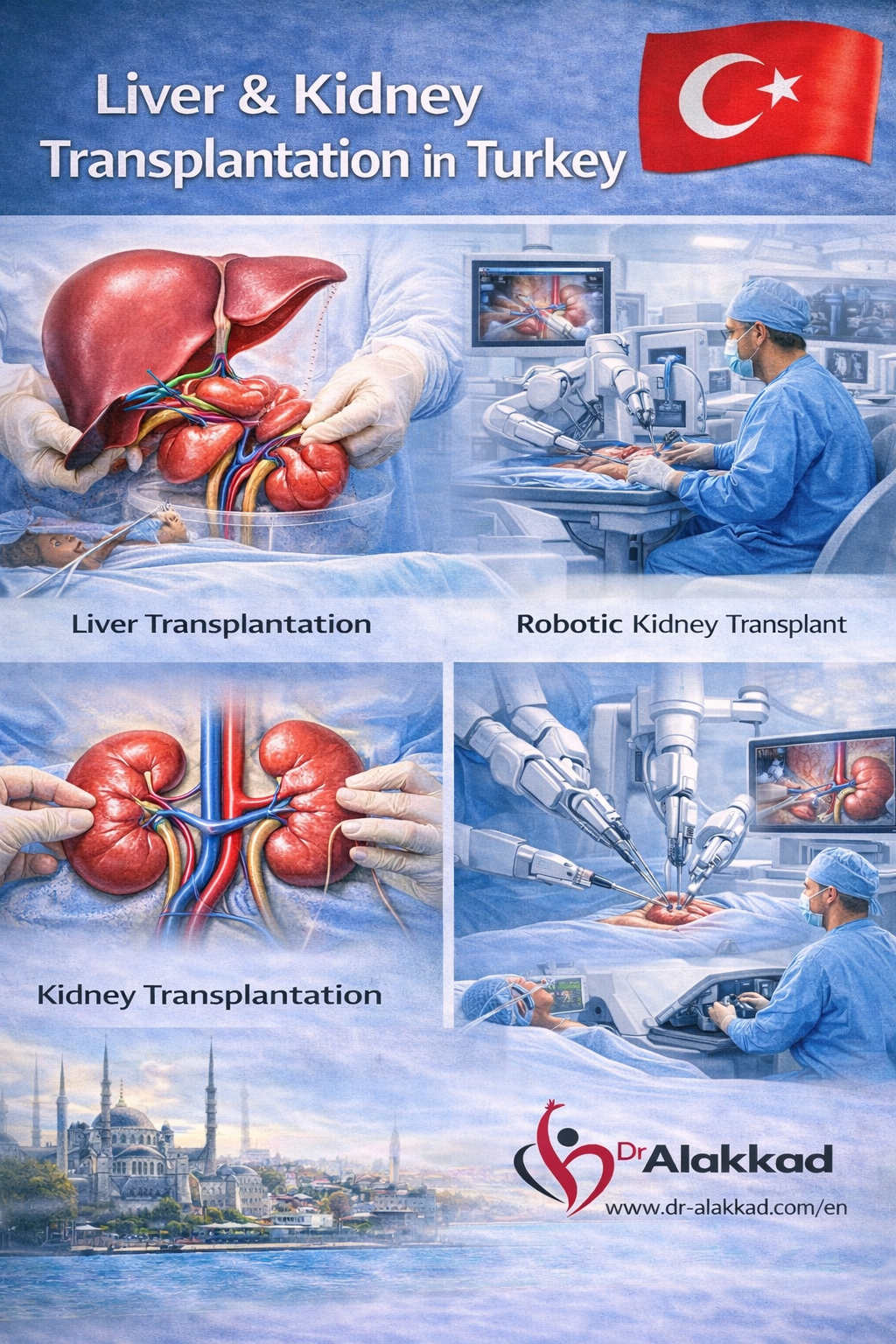
Liver and kidney transplantation in Turkey
Conclusion
Turkey’s strength in liver and kidney transplantation stems from advanced surgical expertise, strict adherence to AASLD/KDIGO standards, cutting-edge infrastructure, and meticulous follow-up systems. For Arabic-speaking patients, Dr. Al-Akkad provides end-to-end coordination—before, during, and after surgery—with transparent medical and financial management grounded in the latest global evidence.